Yesterday, on August 12, the world celebrated World Elephant Day. These awe-inspiring creatures might appear intimidating due to their immense size, yet they quickly capture hearts upon observation. This day holds significance, not only to honor these majestic beings but also to raise awareness about the crucial conservation efforts required to safeguard the species.
Given their substantial spatial needs, collaboration among all stakeholders is vital to devise effective protection measures for elephants and local communities. As elephants disregard international boundaries, cross-country cooperation and shared strategies are essential for success.
Presently, three distinct elephant species are recognized: African Savanna, African Forest, and Asian elephants. African Forest elephants inhabit the dense forests of Western and Central Africa, while their larger counterparts, the African Savanna elephants, roam the rest of the continent. Asian elephants thrive in select areas of India and Southeast Asia. All three species exhibit social behavior, living in familial groups referred to as herds or parades. Herds primarily consist of related females, while male bulls either live solitarily or form bachelor herds. Forest and Asian elephants often divide into smaller family units, occasionally reuniting with larger herds near water or substantial food sources, reflecting their preference for dense jungle habitats.

All three elephant species, characterized by their impressive size, require a substantial daily intake of vegetation. Despite their immense size, their digestive systems are inefficient, leading to the digestion of only about 40% of the food they consume. Consequently, they spend nearly twenty-two hours a day feeding. As human populations expand and available elephant feeding areas shrink, elephants are forced to explore new food sources, often leading them into crops and farmlands. These clever “crop raiders” time their raids, frequently occurring at night when farmers are asleep. These encounters often result in conflict, and sadly, many elephants lose their lives. While governments attempt to subsidize affected farmers, monitoring and control are challenging.
Another pressing issue is poaching. Although Southern Africa generally experiences less elephant poaching, some parts of East Africa have seen a resurgence over the past decade. Once elephants venture beyond protected areas, monitoring and safeguarding become difficult, providing poachers with opportunities. The delay in discovering or reporting poaching incidents can extend to weeks. Regrettably, poaching affects all three elephant species, as they possess sought-after ivory tusks.
On a brighter note, elephant populations are either stable or increasing in well-protected regions. This positive trend is attributed to heightened awareness and the benefits of tourism. Recognizing tourism’s economic impact, communities are realizing its potential to generate income, employment, and opportunities. In some regions such as Zimbabwe, Zambia, and Uganda, elephants are so well protected that they wander through villages and towns. These examples showcase successful coexistence between humans and elephants, demonstrating the possibility of peaceful interaction.
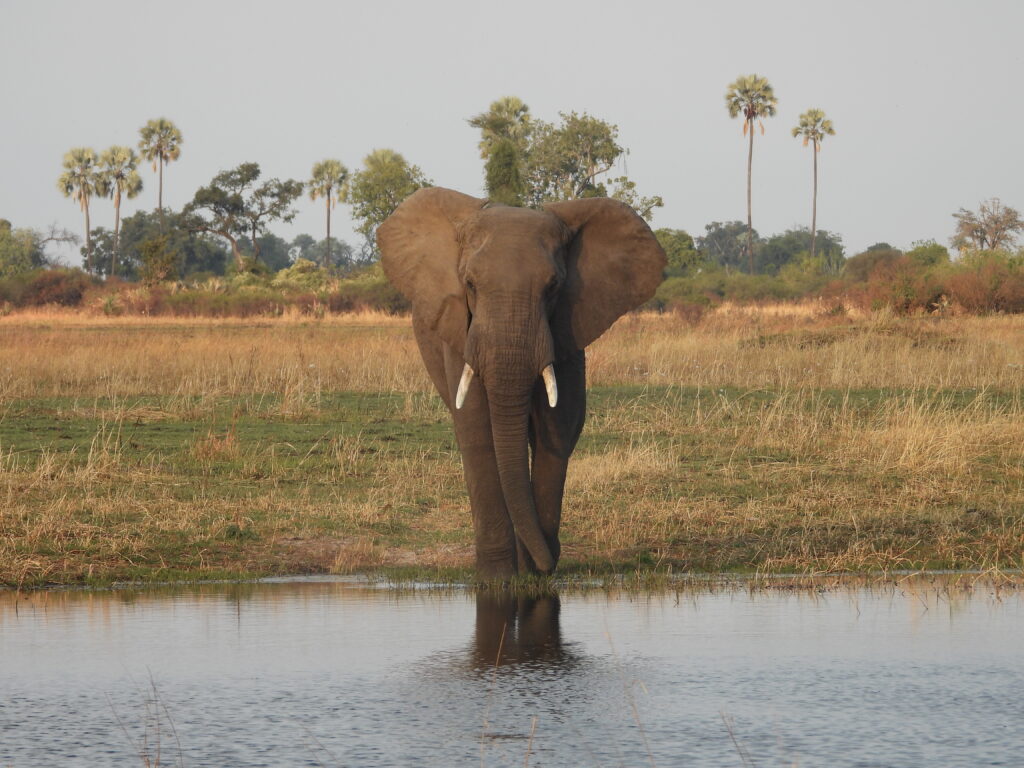
Regarding the three species, the Forest and Savanna elephants share many similarities, while the Asian elephant stands apart with distinct differences. The Forest elephant, evolving from its Savanna counterpart, adapted to thrive in a completely different environment. The primary distinction lies in size, with the Savanna elephant being considerably larger. Additionally, the shapes of their ears vary, as Forest elephants possess more oval-shaped ears. Their tusks are generally straighter than those of Savanna elephants, though this can vary among individuals.
Comparing African and Asian elephants reveals even more contrasts. Asian elephants are smaller, and their ears are notably smaller as well. This adaptation is because Asian elephants don’t rely on their ears for cooling, unlike their African counterparts. Inhabiting dense forests, Asian elephants are less exposed to the sun.
Both species possess highly dexterous trunks composed of over 30,000 muscles, but the trunk tips differ. Asian elephants have one prehensile lip at the tip, while African elephants feature two, resembling a grasping hand. This lip aids in delicately picking up small objects like fruits and sticks. The forehead of an Asian elephant is notably rounder than that of an African elephant, with variations between sexes within the African species—cows have more angular foreheads, while bulls are rounder. Furthermore, when examining their backs, African elephants exhibit a sloping back, whereas Asian elephants have a more rounded back.

Regardless of differences, all species are important and we need to preserve them. Allowing this intelligent species to vanish without giving future generations the chance to enjoy them would be a grave mistake.. Currently, Botswana boasts the highest elephant population, with these magnificent creatures freely roaming across the country. Similarly, South Africa harbors an abundant elephant population, yet their movement is confined to protected regions like the Greater Kruger National Park.
Elephants Alive is an organization that does phenomenal work with elephants here, helping with research and educating people on elephants and the importance they have. The Mara Elephant Project is doing the same in East Africa. Look at their sites and help in anyway, or contact Wandering Thru for more details.
To secure your best African Safari, contact Wandering Thru without delay.