Wildebeest, also known as gnus, are a fascinating species of antelope found primarily in the grasslands and savannas of Africa. They belong to the genus Connochaetes and are divided into two species: the blue or brindled wildebeest (Connochaetes taurinus) and the black wildebeest (Connochaetes gnou). These animals are known for their large herds, migratory behavior, and unique physical characteristics.
Where do they come from?
The genus Connochaetes is part of the family Bovidae, which includes antelopes, cattle, goats, and sheep. The blue wildebeest (Connochaetes taurinus) is further classified into several subspecies, including the western white-bearded wildebeest, the eastern white-bearded wildebeest, and the nyassa wildebeest. The black wildebeest (Connochaetes gnou) is a separate species with its own subspecies, such as the eastern black wildebeest and the western black wildebeest.
Wildebeest are believed to have evolved around two million years ago in East Africa. Their evolutionary history is closely tied to the development of open grasslands, which provided them with the ideal habitat for grazing and migration.
A strange build
Both blue and black wildebeest have similar body shapes, characterized by a robust build, high shoulders, and a sloping back. They have a distinctive facial profile with a broad muzzle, large nostrils, and upward-curving horns. Wildebeest are known for their dark brown to black coats, which serve as camouflage in the grasslands.
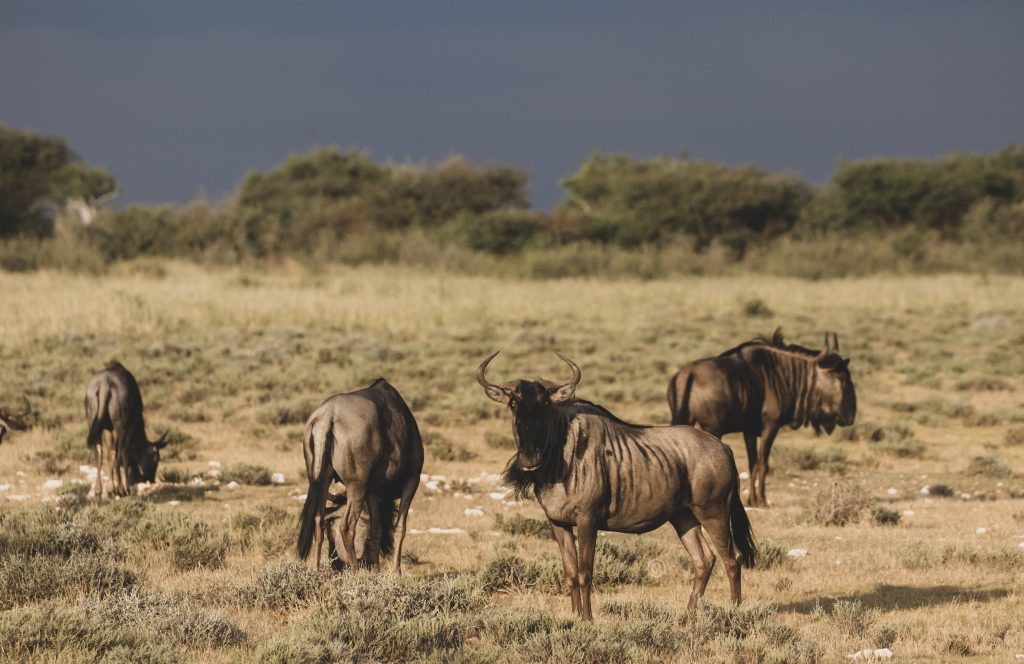
The blue wildebeest is larger and more widespread than the black wildebeest. Adult males (bulls) can weigh between 250 to 300 kilograms (550 to 660 pounds) and stand around 1.2 to 1.5 meters (4 to 5 feet) tall at the shoulder. Females (cows) are slightly smaller and lighter.
Calves of both species are very different when they are first born. They are more of a light brown, much lighter than the adults. They slowly darken with age and when they’re about eight months old, they will have the same colouration of the adults.
Where can they be found?
Blue wildebeest are found in a wide range of habitats across eastern and southern Africa, including grasslands, savannas, and open woodlands. They are particularly abundant in countries such as Tanzania, Kenya, Botswana, Namibia, and South Africa. Black wildebeest, on the other hand, have a more limited distribution, primarily in South Africa and Namibia.
These antelopes are well adapted to grassland environments, where they can graze on a variety of grass species. They require access to water sources, especially during the dry season when water availability becomes limited.
Social behaviour
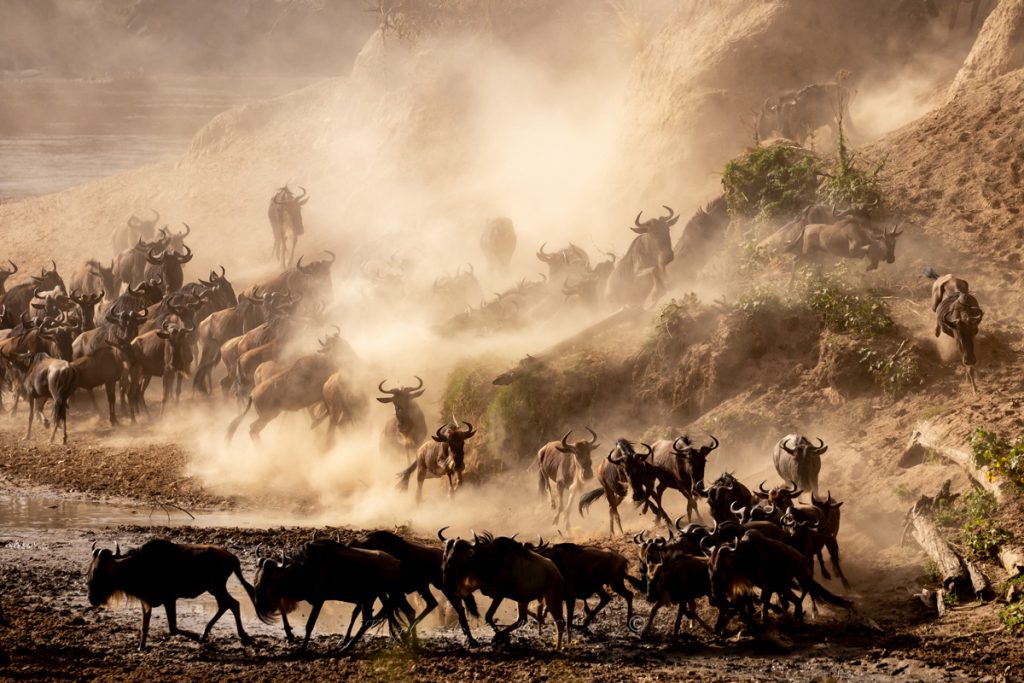
Wildebeest are highly social animals that form large herds, sometimes numbering in the thousands during migration periods. These herds provide protection against predators such as lions, hyenas, and crocodiles. Within the herd, there is a hierarchy based on age and dominance, with older bulls often leading the group. In East Africa, bulls will lead harems, where in Southern Africa, bulls are known to set up territories, with herds of females and youngsters moving between the dominant males.
During the rainy season, wildebeest herds engage in seasonal migrations in search of fresh grazing areas and water. These migrations can cover hundreds of kilometers, showcasing their remarkable stamina and navigational abilities. The annual migration of wildebeest in the Serengeti-Mara ecosystem is one of the most iconic wildlife spectacles in the world.
Wildebeest communicate through vocalizations, including grunts, snorts, and lowing sounds. These vocal cues help coordinate group movements and alert others to potential dangers.
Reproduction and Lifecycle
Breeding among wildebeest typically occurs during the rainy season when food is abundant. Males compete for mating opportunities by displaying dominance and engaging in sparring matches with their horns. After mating, females give birth to a single calf after a gestation period of about eight and a half months.
Calves are born with the ability to stand and walk shortly after birth, some even within the first 5 minutes of life. This allows them to keep up with the herd immediately. They are protected by their mothers and the herd from predators. Calves start grazing on grass within a few weeks but continue nursing for several months before transitioning to a fully herbivorous diet.
Wildebeest have a lifespan of around 15 years in the wild, although predation, disease, and environmental factors can influence survival rates.
How important they are
Wildebeest play a crucial role in the African ecosystem as both prey and ecosystem engineers. Their grazing behavior helps maintain grasslands by preventing the dominance of woody vegetation. This grazing also stimulates plant growth and nutrient cycling, benefiting other herbivores and supporting a diverse array of wildlife.
Additionally, wildebeest are a vital food source for large carnivores, contributing to the balance of predator-prey dynamics in their habitats. Their seasonal migrations also have ripple effects on other species, influencing patterns of movement and resource utilization.
Zebra friends
Throughout their distribution, different wildebeest species will overlap with different zebra species and the two often co-exist, living side by side. Some people say it’s because predators prefer eating the wildebeest and so the zebras use them for safety, but this is most certainly not the case. They do help one another as an anti-predator with more eyes and ears keeping a lookout.
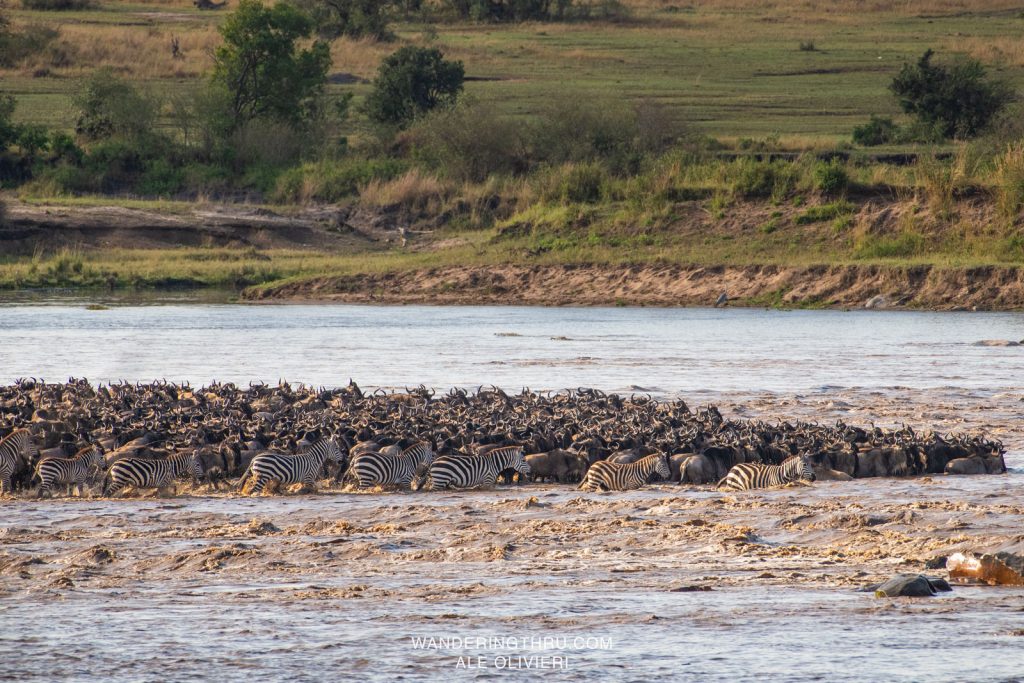
Traveling in the large herds can make it a lot more difficult for predators to single out individuals as well. For example, when the large herds cross the Mara River during the mass migration. With all the bodies and flaying hoofs, it can make it for more difficult for a crocodile to single out an individual. Even these large reptiles run the risk of being crushed by the sheer number of prey.
The main reason comes down to their feeding habits. Zebra, with their prehensile lips, prefer the longer grasses. Wildebeest on the other hand, with their flat muzzles, prefer the shorter grasses. This means that zebra will often graze first, with the wildebeest following behind. In essence, the zebras cut the grass for the wildebeest.
Conclusion
In conclusion, wildebeest are iconic African antelopes with unique adaptations, social structures, and ecological roles. Understanding and conserving these magnificent animals are essential for maintaining the biodiversity and ecological balance of African ecosystems.