Situated in the Northern Cape province of South Africa, Tswalu falls into the area known as the Green Kalahari. Here an array of different species can be found, from the large Desert Black Rhino, to small Cape Foxes. This area is renowned for its unique animals, with sightings of some of the more sought-after animals, like aardvark, aardwolf, and pangolin being more common. As with all wildlife, nothing is a guarantee, but here in this special place, you may increase your chances.
History
Tswalu Kalahari was first started in 1995, and the idea was to restore the area to what it was before European settlers and farming had taken over in the area. The idea was to create a space where people could experience the enormous Kalahari landscape. Slowly but surely the area was rehabilitated, and wildlife that was once found in the area was reintroduced. A lot of research was done in the area to help with this, and till today, a large amount of research is carried out on the property.
Korannaberg Mountains

Running north-south and found on the eastern side of the Tswalu area. The mountains themselves have many different habitats. The Korannaberg itself is one of the largest inland manganese deposits in the world. These different habitats result in an extremely diverse animal population. To the western side of the reserve is where you can find the rolling red dunes associated with the desert.
Survival
In this environment, moisture is the main key to survival, and the plants and animals have adapted in ways to cope with this. Several of the animal species obtain moisture from the plants they feed on, while plants retain moisture and limit evaporation with small leaves and spines. Some animals remain underground all day and only venture out at night, while others have created their own microhabitats within their burrows. Being waterproof is also key, and some of the lizards have evolved to have overlapping scales, reducing moisture loss.

Predators get moisture from the blood and tissue of their prey. Some predators, antelope, and rodents that don’t usually eat fruit have added fruits like Tsamma melon to their diets to get moisture. Damara molerats and porcupines obtain moisture from the roots and tubers they feed on. Highly concentrated urine from rodents, giraffes, and steenbok also helps reduce moisture loss.
People often think they will find many succulents in this area, but that is not the case. It is thought that the winters are too harsh for them, and they cannot cope with the low temperatures experienced. Annual trees and shrubs are typical of the area, being abundant during good times and absent in bad. When they do occur, they often have large flowers that attract birds and insects. This is short-lived but provides the Kalahari with a beautiful splash of color. Perennial plants provide herbivores with a stable supply of food in both wet and dry times, surviving unfavourable times in the form of seed.
A large amount of bird species are found in the area, and just sitting at a waterhole will produce an array of species in a short time. In the evening, Namaqua sandgrouse arrive to drink, with the males soaking their breast feathers, taking water back to their chicks that may be many kilometres away. Large raptors and vultures do well in the area, with endangered Lappet-faced vultures and Secretary birds nesting in the area as well. The smallest of the raptors, the Pygmy falcon, is also found in the area, utilising a chamber in a social weaver nest to nest themselves.
Some of the specials
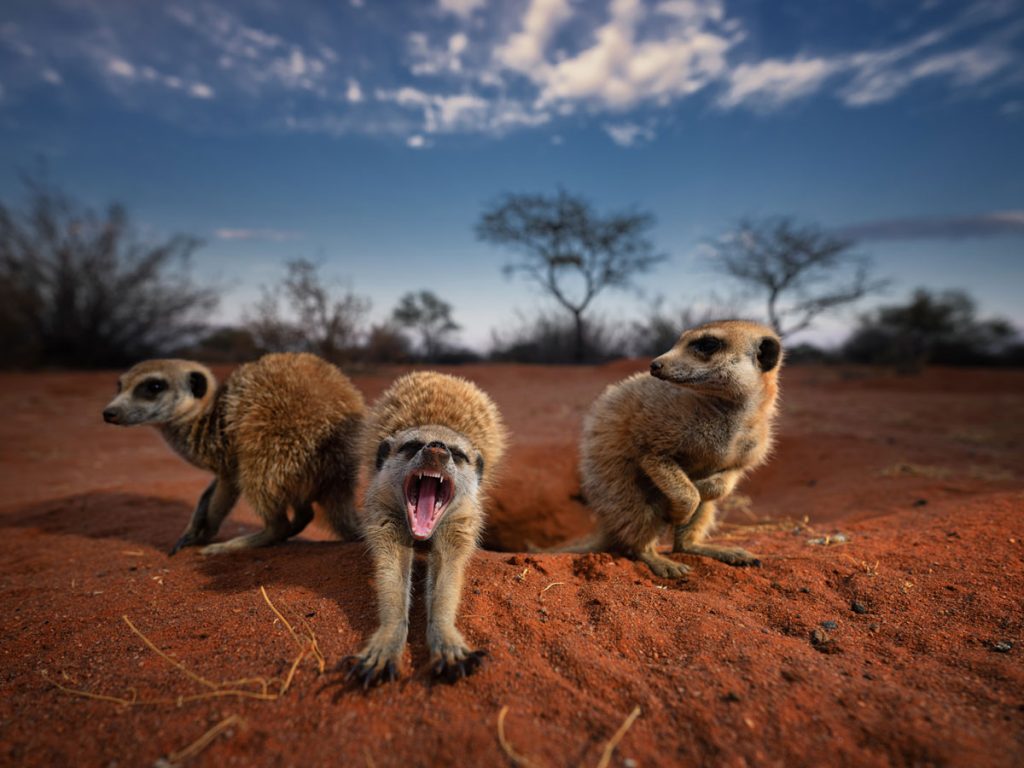
The meerkats of Tswalu definitely need to be mentioned here, as a lot of hard work has gone into studying and habituating these special little creatures. Some of the groups in the area have been followed for more than a decade now, and they have become used to people viewing them and following them on foot. It is such a special treat to spend time with these little guys as they wake up in the mornings and emerge from their burrow, or in the evenings before they disappear for the night.
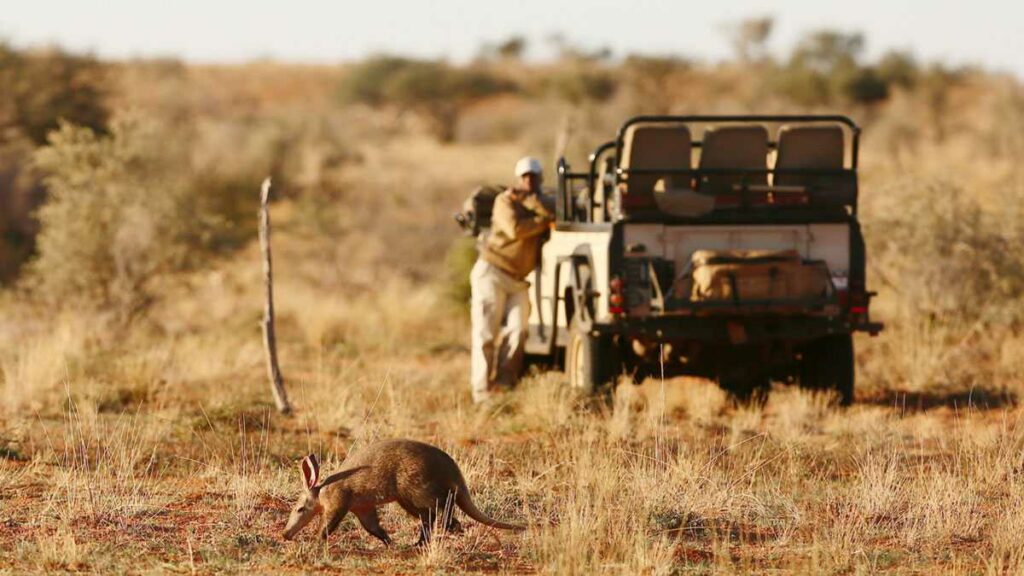
Tswalu is famous for its “Secret Seven Animals”. The seven special species that make up this list are the pangolin, aardvark, aardwolf, bat-eared and Cape foxes, brown hyena, and African wildcat. As with all wildlife, nothing is guaranteed, and if you can walk away from a safari in the area saying that you even saw two or three of these special species, you can count yourself lucky.
The desert black rhinos are obviously also very special, and this is one of the few places in South Africa where you can find them. Cheetah and the Kalahari dark-maned lions can also be found here. Cape Mountain zebra can be found in the Korannaberg sections of the park. At night, you also may be lucky enough to catch a glimpse of the odd springhare, which looks like a cross between a hare and a kangaroo. They dig burrows that they hide up during the day, covering the entrance like a trap-door spider, and are so well hidden. The burrows then also stay nice and cool because of this.
The lodges
There are three lodges to be found on the property. They are all very well spaced out and are all in beautiful settings. Motse was one of the first camps built and is found at the foot of the mountain range. Every room gets its own private vehicle while guests share dining areas. Tarkuni is a private villa situated in the Tarkuni Valley and is perfect for a large family or friend group travelling together. Loapi is the newest of the camps and consists of six private luxury villas. Each villa has its own ranger/tracker team, chef, and butler.
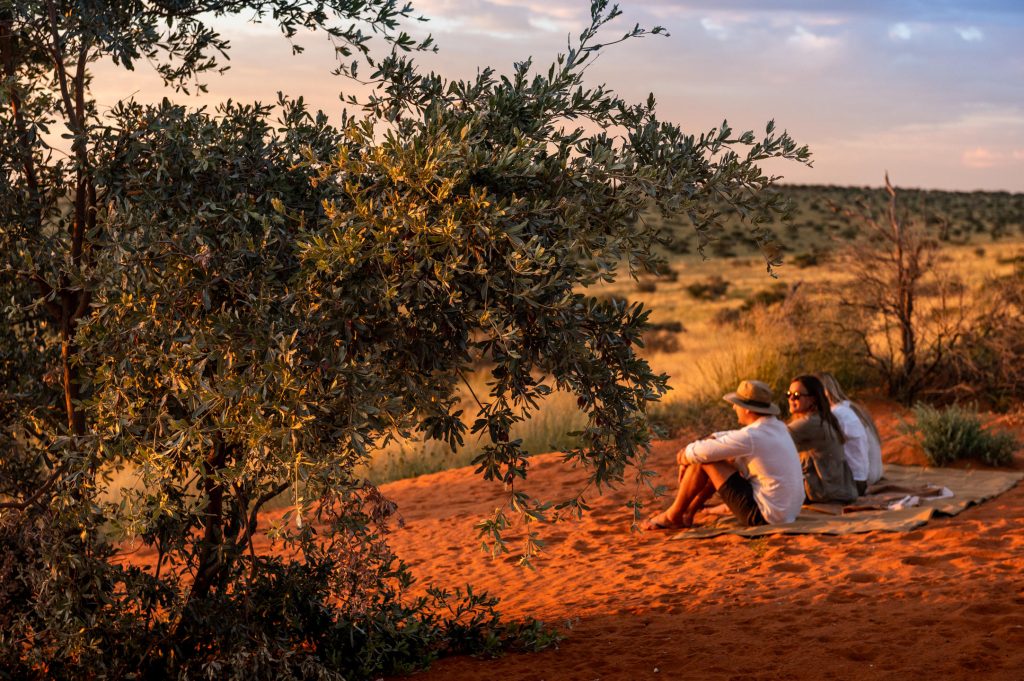
Tswalu Kalahari is a unique and special place. It may not be the best place to visit on a first safari, as the large herds and Big Five animals are certainly not the main attractions. For people that are keen on experiencing an incredible wilderness area, spending time tracking and looking for the unusual specials, this is the place. We don’t want to give away all of its amazing secrets, but this is definitely a place to think about adding to an itinerary at some point.