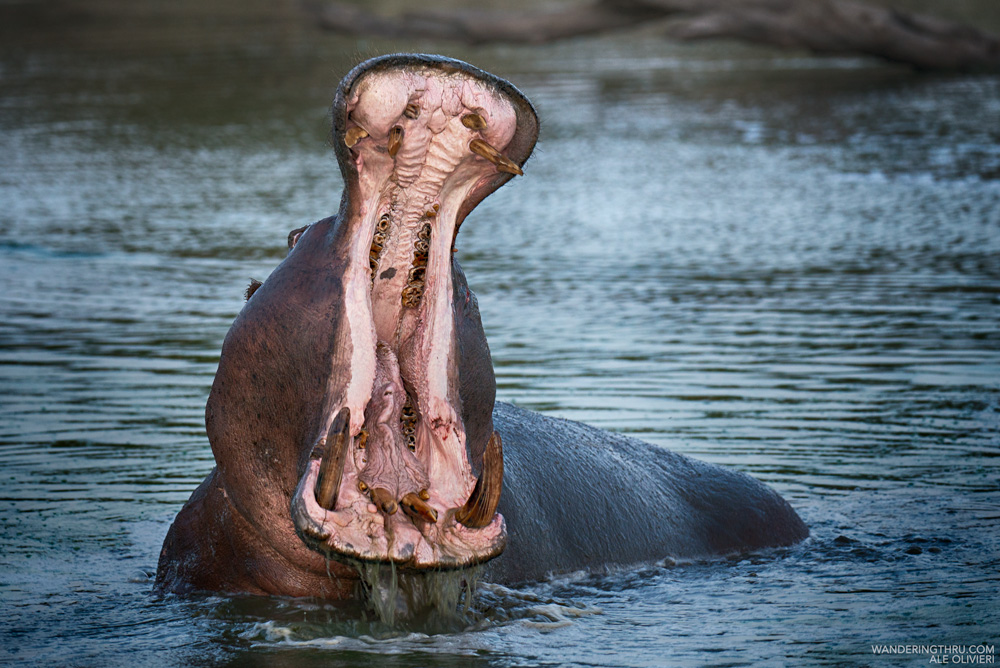
Another one of Africa’s iconic animals, the hippopotamus, or better known as a hippo, is found throughout the continent wherever permanent water can be found. Known for its loud nasal snorts, wide gaping yawns, and beady eyes, all that visit Africa want to see one. To many people’s surprise, though, it is not easy to see this large mammal out of the water, and it is just the top of the head that people get to see.
The yawn of a hippo is the picture that everyone wants to get for their safari album. It must be remembered, though, that this does not indicate that the animal is tired but is rather a threat display. The hippo is showing the impressive weaponry they have in their mouths. This could be for other hippos or any other animal getting too close to them, including people.
People will often refer to them as the most dangerous animal in Africa and say they are responsible for the most deaths every year. This statement is not fully correct. They are dangerous, yes, but numbers have shown that hippos, elephants, and lions are responsible for about the same amount of human deaths every year. Where problems can happen is when people get too close to them in the water, not following their warnings. Also, water is regarded as their safety point, so it is a bad idea to get between a hippo and water, especially if it gets frightened. Unfortunately, as Africa is a fairly dry continent and a lot of rural villages are built around constant water supplies, conflict between people and hippos is inevitable.
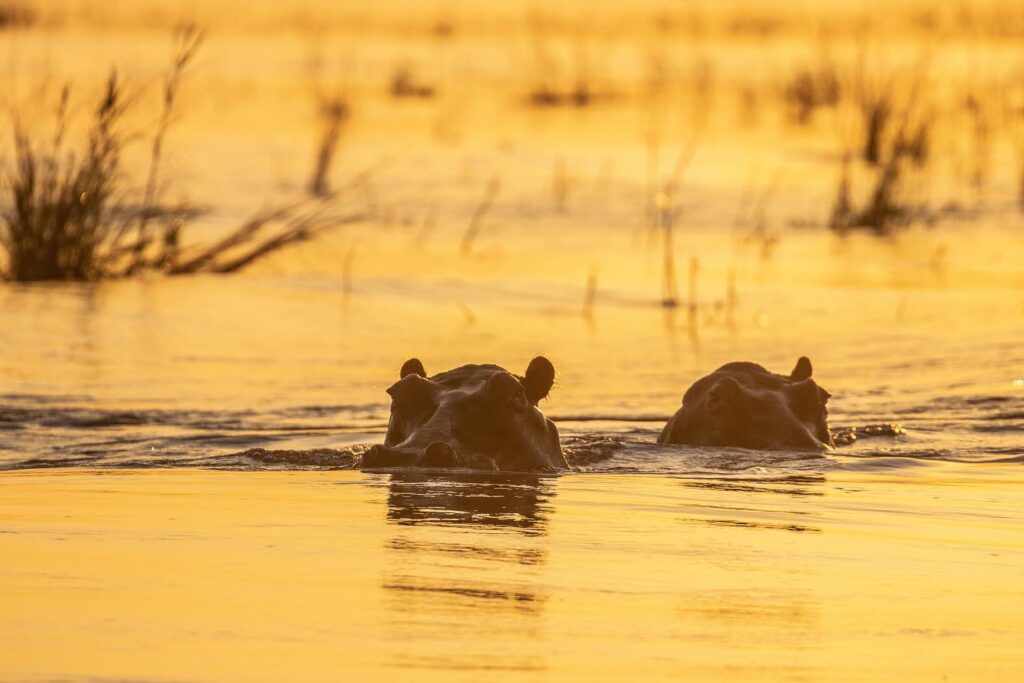
When we see hippos, we either see them in groups or we see them alone. The groups that we see are herds (pods or rafts) made of a single dominant bull, his cows, and their youngsters. Bulls are incredibly territorial when they are in the water, and they will fight to the death to protect and keep their harem. It is these fights that are witnessed where bulls will crash into one another with mouths agape. It is not only the large canines that inflict damage, but the large spear-like incisors of the bottom jaw as well. As mentioned, fights can be to the death, and occasionally both animals may die from their wounds, especially if you have evenly matched bulls and neither will give up.
When you see lone animals, it will be either young bulls or old bulls. Young bulls that started showing a little too much interest in the ladies and so dad chased them away, or the old bulls that have lost dominance Strangely enough, these bulls are allowed to join up with the group at night when they come out to graze. The simple reason is that hippos cannot breed out of water as their legs are too short. This means the dominant bulls don’t like them hanging around; as try as they might, they can’t do anything with the ladies.
After a fairly short gestation period of only eight months, a hippo cow will give birth to her calf in the shallows. Not only is it water birth, but when a calf suckles from its mother, it does so under water. A female needs to be careful with her calf, as it can easily be drowned by other group members because it is so small, so she keeps the little one to the side of the group for the first few weeks. It is important that dad holds on to his territory or doesn’t go wondering, as hippo bulls will practice infanticide and new bulls will kill any small calves.

Hippos spend the heat of the day resting up in large water sources where they can completely submerge themselves. The reason for this is that they have incredibly sensitive skin and get very badly sunburnt if exposed to the harsh African sun. If a hippo gets caught out of the water for some reason, they excrete a substance onto the skin to try to protect themselves. They can dehydrate very quickly as well, so water is a must. This does not mean that they won’t leave the water to enjoy a good old bask in the sun, especially in the winter. They very seldom feed on any aquatic vegetation, as they prefer coming out of the water at night to graze on their preferred, short, sweet grass.
Being a large animal, with bulls weighing almost 3 tons, people expect them to consume a large amount of food and water, but this is not the case. If you compare them to white rhinos, which are a little larger but of very similar size, they are very different. Whereas a white rhino bull will eat about 100 kilograms (220 pounds) of grass and drink around 30 litres of water a day, a hippo will only consume around 40 kilograms (90 pounds) of grass and drink about 8 litres of water. While staying in the water during the day, hippos don’t use as much energy as a rhino that is moving around, so they don’t need as much food. Also, being surrounded by water a lot of the time, they don’t lose moisture to the elements like the sun and the wind.
Although they spend their days in the water, hippos cannot actually swim. They need to either stand or lay on the bottom. They can push themselves up to breathe or even stand on their back legs. Youngsters that struggle will often clam up onto their mothers backs to help with this. On average, a hippo will only submerge for 2-3 minutes at a time, but if they need to, they can stay under for as long as 7 minutes. This is if they need to cross a deep channel. An adaptation to help with this is changing their heart rate. A hippo that is above water has a heart rate of around 80 beats per minute, but a submerged animal half’s this to 40 and so saves oxygen. Hippos also sleep in the water, laying on the bottom. Subconsciously, they will come up to breathe, only exposing the nostrils as they take a deep breath.
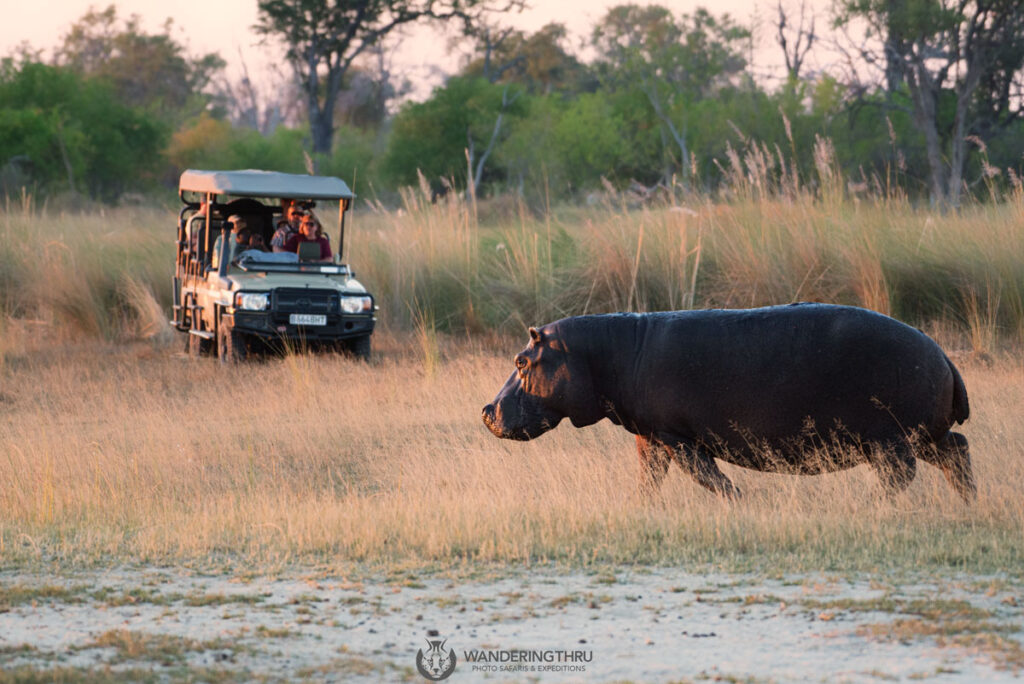
Fortunately, hippos are found throughout the continent, or at least wherever we find constant water, which means that depending on where you travel, there is a good chance you may get to see these awkward animals. Although you may not be lucky enough to see them out of the water, you may be lucky enough to hear the call—definitely one of the calls of Africa.