Summer Safari in Southern Africa

The festive season is one of the most popular times of the year to travel. People from Europe or America often associate this time of the year with snow and cold Christmas celebrations; it is quite the opposite down in Southern Africa. This is the peak of our summer, and people are not often aware of it. When we speak of summer time here, we are talking about the beginning of October through the end of March. It is a very long season. Here we will have a look at some of the safari experiences people can expect to come across when travelling to Southern Africa over this period.
Weather
As this is Africa and, as a whole, this is a warm continent, this is exactly what you can expect. Most of the safari areas will generally average between 35 and 42 degrees Celsius (95 and 108 degrees Fahrenheit). Sometimes we will experience heat waves, and this can soar to higher temperatures. Thankfully, most of the lodges are equipped with swimming pools or plunge pools, so they are a welcome treat between the safari activities.
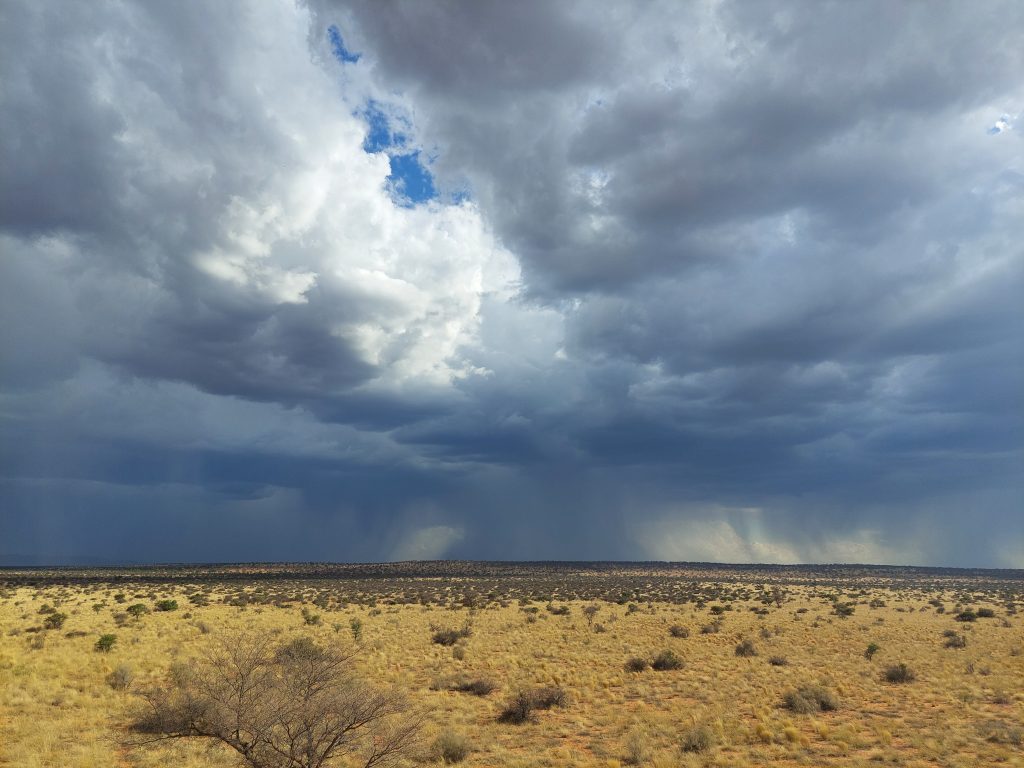
Most of Southern Africa experiences summer rainfall, so this is the time of year for it. Fortunately, we very seldom experience rain that sets in for days, and we are more accustomed to having flash-lightening storms. This in itself is a magnificent show and something to experience.
Water is life, though, and after the end of the dry season breaks, it is incredible to experience. The rivers and dams fill up, and so do they, bringing back a whole host of life that is more dormant during the winter and dry periods.
Vegetation
With the rain and the heat, the vegetation explodes into greenery. With roughly 950 species of grasses, 19 000 species of flowers, and 1700 native species of trees, there is more than enough to go around. As soon as the rains come, areas that look draining and barren are quickly filled with grasses and flowers. Seeds that have laid dormant during dry times quickly germinate and take their place.
Trees burst into life, flowering and getting fresh shoots as the rain rehydrates them. Even though we get to experience this phenomenon yearly, it still amazes us as to how fast everything out here can change. Along with the vegetation comes the life that so desperately needs it to flourish.
Creepy Crawly’s
As the water starts to fall, little creatures start to emerge from their hiding places. Eggs that were laid the previous season start to hatch. Insects, arachnids, amphibians, and reptiles all join the bush-veld party once again after being missing for months.
Insects have just been waiting for the heat and water combination to come out. From dung beetles to termites, they all thrive in humid conditions. It is not uncommon to have massive outbursts of insects on a warm evening following an afternoon thundershower, especially flying termites (alates) and certain beetle species. All the pollinators show themselves, and the vegetation bursts into flower. These pollinators come in many different forms, all adapted to specialise in different flowers. From honey bees feeding on the sweet-smelling spikethorns, wasps pollinating the euphorbias, and flies on the smelly terminailias.

Arachnids like scorpions, spiders, and solifugae become far more active once the temperatures go up again. With ultra-violet lights, guides will often find and light up scorpions hiding on dead trees. We are still not sure as to why they do this, but their exoskeleton shines brightly under the light. Seasonal spider eggs, from golden orb-web to garden orb-web, hatch, and we get to watch them grow through the season. Bark spiders spin their massive webs across the road every evening, occasionally catching bats and birds. At sunrise,l they consume their own webs so as not to waste any protein, and then spend the day hiding on a tree branch, perfectly camouflaged. Solifagues scare most people, come out as voracious little predators, and actively run around and hunt their prey.
Amphibians seem to appear out of no where, staying dormant underground and coming out of hiding at the first rains. Once quiet, ponds, dams, and rivers are immediately turned into loud theatres. At times, it can be so loud that even shouting at the person next to you doesn’t help them hear you; it’s almost deafening. With many different species of frogs and toads competing for females. With all the calls, it’s amazing that with the noise, females can find their males, but all calls are at different pitches, and females block out all other noise, hearing only their own kind.

Reptiles make an appearance at the same time. Not all of them go dormant over the winter period, but they are more sluggish and not as active with the cooler temperatures. With the heat going up, crocodiles, tortoises, monitor lizards, and snakes all become far more active. Snakes of all types show themselves, of all sizes, feeding on different things. We do have a few highly venomous snakes and large African rock pythons. We do not see these snakes all the time, and they are not as common as people think. Fortunately, they try to avoid us as much as we avoid them, but it is always great to observe them in their natural environment at a safe distance.
Birds and Mammals
We have a large number of bird species in Southern Africa, but this number goes up by almost 40% during the summer. Birds arrive from all over the world to take advantage of the mass amounts of food that are available to them during this period. Birds will feed on the vegetation, but the main food source would be the abundance of insects. Not all of the species will breed on their summer visit here, but a lot of the birds do, along with a lot of the resident species too. This attracts a large number of brood parasites (birds that use other birds to raise their chicks), like cuckoos.

A large number of the large mammals will also be giving birth at this time, especially the herbivores. Things like the antelope, primates, and warthogs synchronise their birthing time with the rains, as it is the time of plenty. Elephants, buffalo, giraffes, rhinos, and zebras don’t have a specific time of year, but it does benefit them to have their youngsters at this time too. It is easy for mom to stay fed, provide the youngster with a lot of milk, and give them a great start to life.
People will often say this is a difficult time of the year for predators as prey species disperse with good food and water supplies. This can be true, but with the influx of young animals, it can make hunting easier for them too. More vegetation also means more cover, and so it can make stalking prey easier as well.
Conclusion
Summer may be a hot and humid time of the year to visit Southern Africa, but with the array of fauna and flora, it most certainly makes it worth while. As with many safari destinations,we suggest trying it at different times of the year to get the whole picture. From summer to winter, you could be filled with the thought that you have visited two completely different places.