Africa is in itself a very harsh place to live, and raising young animals can be incredibly difficult and dangerous. Drastic weather conditions, predators, and competition are some of the things that contribute to these difficulties. From social upbringing to solitary parents, they have come up with ways that best suit their lifestyles and habitats. In this blog, we’re going to have a closer look at the different strategies mammals use to raise their young.
Family raised
People often think that animals are like people in the sense that they will adopt another’s youngster if something happens to the mother. This is generally not the case, though, and very seldom will an animal adopt another’s youngster. Unfortunately, taking on another youngster can put your own safety at risk, and a lot of animals are not willing to do that.
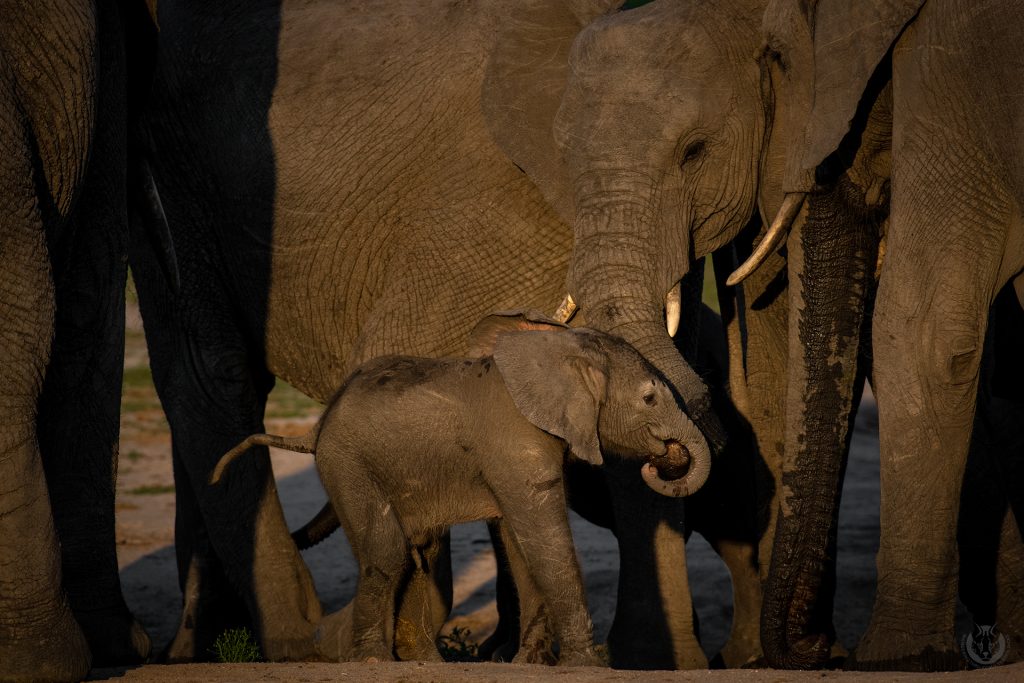
Animals that will be adopted are generally animals that belong to a family group, like prides of lions or herds of elephants. These groups are made up of related females, and it benefits them to help look after each other’s offspring. They are still looking after their own genes. These are also the two species that will allow-suckle, meaning they will allow other young that are not their own to suckle from them. Lions are more so than elephants, as a lioness will suckle any cub once it has been introduced to the pride. This means you’ll even see different-aged cubs suckling at the same time from the same lioness. Elephants, on the other hand, will only do so if something happens to the mother—if she dies or gets ill and can’t suckle her own. All females in these groups will also all protect young, whether theirs or not.
At one point, they thought that this was the case with primates as well. They have recently found that primates will adopt, but again, if it is a relative of theirs. They will not just adopt random offspring, as was previously thought. In the case of primates, males will also adopt and help raise related youngsters.
Group raised
There are different ways to be raised in groups. One is being raised in a group where there are many females all having their own young, like antelope. Or a hierarchy system where only one female has young, but the rest of the group helps raise the young for the good of the group.
Most of the antelope species have learnt to give birth during the rainy season, when food is plentiful and it is easy for the female to produce milk. They have also learnt to synchronise their births, having all of their children within a few days or weeks of one another. As nasty as this may seem, it is a sheer survival through numbers strategy. If you have your young at the same time as everyone else, chances are that a predator will catch someone else’s young rather than your own. If a youngster is separated from its mother and continuously calls out in distress, females from within the herd have been known to turn on it. This is to keep it quiet and keep themselves and their own young safe, as predators will be attracted by the distress call. This has been witnessed in large herds of buffalo where lions are present. Hippo cows have also been known to turn on one another’s calves when times are tough. In times of drought, there is competition for space in the water and also for food.

Complete the opposite: animal groups that help an alpha female raise her young and not their own. Social mongoose species, like dwarf and banded mongoose, along with African wild dogs, are good examples of this. Even though only one female is young, the others will help protect and bring food to the youngsters. Babysitting will be shared amongst group members, and all members will teach the young how to look for food or hunt.
Black-backed jackals will sometimes stay with their parents to help raise the next litter of siblings. Once the next litter is strong and healthy, the pups from the previous litter will leave. Although things like white rhinos and warthogs will keep their young away from previous young, they will often allow previous young to re-join them a few weeks down the line. This offers extra protection for their young, as well as playmates and babysitters.
Clan raised
Hyenas run things a little differently from the others, as they will often have large communal dens. Dens within a clan’s territory may be used for decades. With hyenas, there is a very strict matriarchal system, and the high-ranking females will usually have their cubs at the main den. Lower-ranked females will often use satellite dens for the first few weeks. When they are strong enough and won’t be bullied, they are moved to the safety of the large communal den. Females will drag food back to the den, and all youngsters are allowed to feed, but they will not allow-suckle and if something happens to a mother, cubs are doomed.
Monogamous and solitary parents
Some of the dwarf antelope, like duikers, steenbok, and grysbok, will raise their young as a pair. Both adults will spend time hiding their little one, but they will also spend time grooming it to keep its scent to a minimum. Youngsters are well hidden and only start following the adults when they are a few weeks old.

Solitary parents like leopards and cheetahs have it a lot harder, as they can’t rely on siblings, partners, or a herd system. The survival of their young falls completely on their shoulders. These mothers will often hide their offspring and spend less time with them. Either this or the young spend all the time with their mothers once they can keep up, like cheetah cubs.
Conclusion
People often say, “It takes a village to raise a child.” It seems that a lot of mammal species agree with this and do it themselves. It may be cruel at times, but all of these animals do what is best for themselves, their young, and the survival of their own individual genes.