When people talk about parasites, very seldom to birds pop up in the conversation. Who would think that a bird could be a parasite? Parasitism in birds is most certainly present and can broadly categorised into two types, brood parasitism and kleptoparasitism. Both strategies involve using other birds and their resources, but each species has evolved to do so in distinct ways.
Brood Parasitism
Brood parasitism occurs when one bird species lays its eggs in the nest of another species, leaving the host to incubate and rear the young. This behavior not only allows the parasitic bird to save energy on parenting but also can enhance its reproductive success. In Africa, there are several well-documented examples of brood parasitism, each showcasing different strategies and adaptations.
Examples of Brood Parasitism
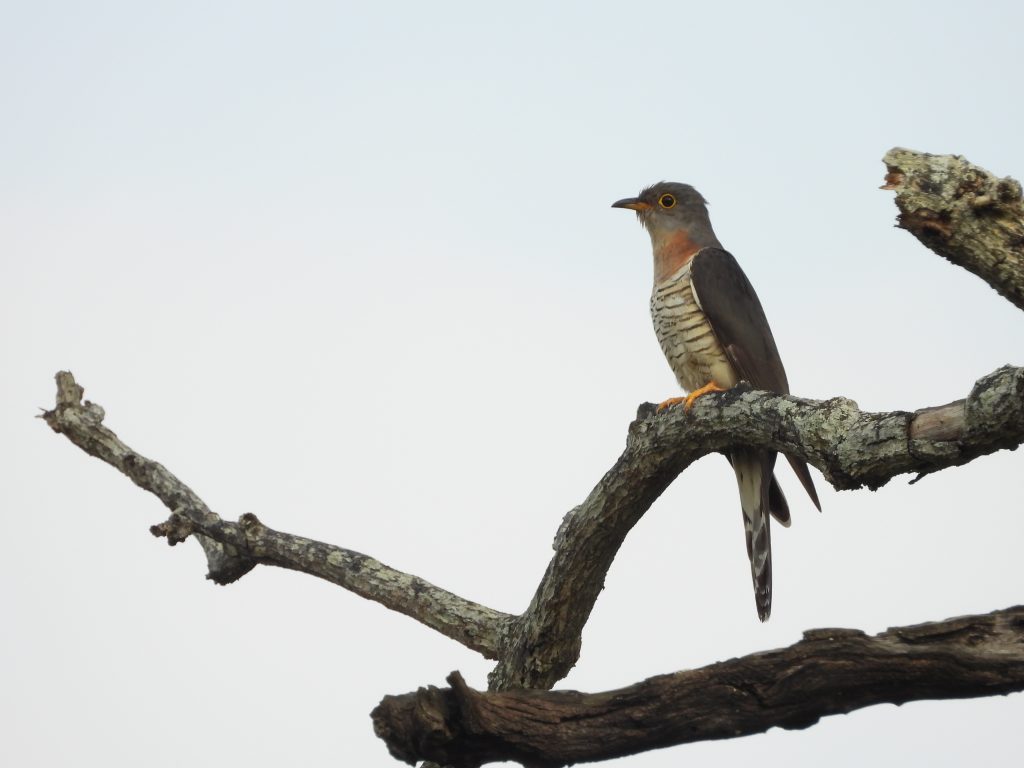
The cuckoo family is perhaps the most famous brood parasites the world over. All of Africas cuckoos are migrants, either within Africa itself, traveling north to south, from Europe or even Asia. Female cuckoos lay their eggs in the nests of other bird species. Each cuckoo species uses a different host species, dependant on size. This is more about the adult being able to access the nest rather than the chick size. The cuckoo egg often mimics the coloration of the host’s eggs, which helps it avoid detection. Once hatched, the cuckoo chick typically pushes the host’s eggs or chicks out of the nest, ensuring it receives all the parental care. This strategy has led to a co-evolutionary arms races between cuckoos and their host. Host species evolve better egg recognition and rejection strategies and the cuckoo constantly needs to find was to keep up and combat this.
Smaller species like whydahs, Indigobirds and honeyguides are also brood parasites to the surprise of many. Male whydahs and Indigobirds change their appearance every season to show off to their ladies. This means they are also easily identified by the host species. This works to their advantage as a host bird will get distracted by the male and whilst the host chases the male away, the female sneaks in to her lay her egg. As with cuckoos, they lay a single egg, but their chicks do not destroy eggs or kill other chicks. Rather they become part of the brood and join their little step brothers and sisters. Again these species all need to keep up with their hosts changes.
Mechanisms of Brood Parasitism
The success of brood parasitism hinges on several adaptations. Many brood parasites have evolved eggs that closely resemble those of their host species in color, size, and pattern. This reduces the likelihood of the host detecting the foreign egg. Parasitic chicks often develop faster than their hosts’ chicks (cuckoos and honeyguides). This allows them to outcompete their foster siblings for food and resources. Some hosts species chicks have adapted to have specialised markings on the inside of their mouths and brood parasites have had to keep up there too.

Kleptoparasitism
Kleptoparasitism, on the other hand, involves stealing food or resources from other birds rather than changing any of their reproductive behavior. This strategy can be found in various bird families and is a fascinating example of competition and resource gain in nature.
Examples of Kleptoparasitism
Frigatebirds are coastal birds found along much of our warmer coasts. They well-known for their kleptoparasitic behaviour and are often referred to as Pirates. They often chase smaller seabirds, such as terns and gulls, to steal their catches. Their impressive flying abilities allow them to outmaneuver their victims, swooping in to snatch fish or squid right from their beaks.
Many members of the corvid family, such as crows and ravens, exhibit kleptoparasitic behavior. They are known to observe other birds as they cache food, then pilfer those caches when the owner is distracted. This behavior can spoil over into mammals as well and they will watch squirrels as well.
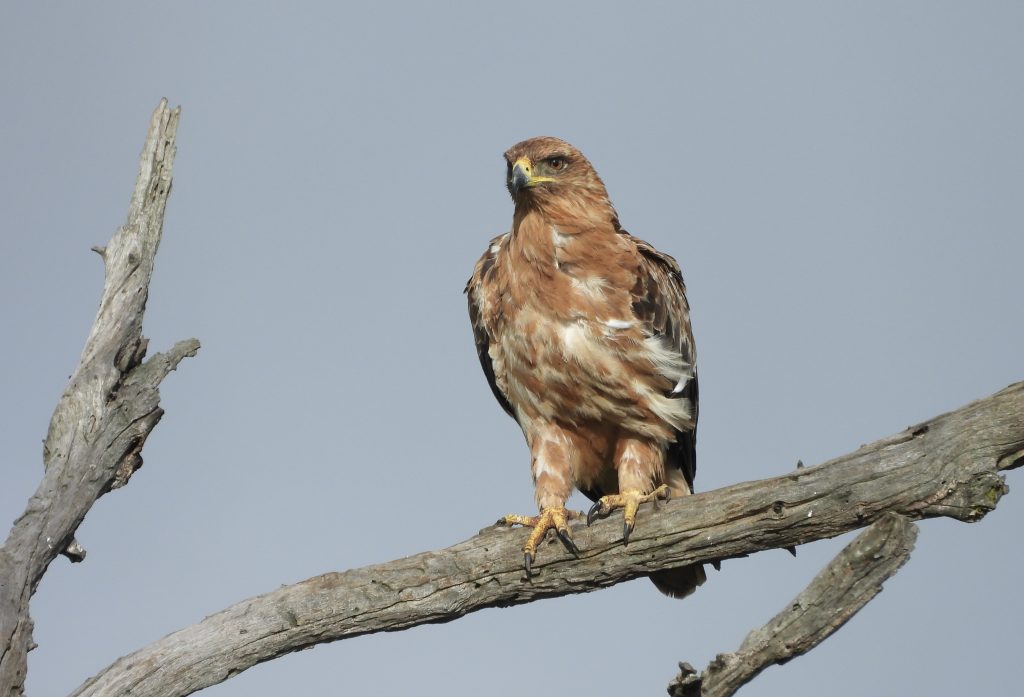
Eagles are not often thought of as kleptoparasites, but the tawny eagle has mastered this art. The eagle itself is a very good hunter and they have been recorded taking monkeys and even impala lambs. They will also scavenge and are often the first to a carcass along with Bateleurs. They will hang around and until they are massively outnumbered by larger vultures before moving off. They are known to steal from not only raptors smaller than them, but from larger birds like Secretary birds and Ground Hornbills too. From all their feeding habits, Tawny eagles are often called the hyena of the bird of prey world.
Mechanisms of Kleptoparasitism
Kleptoparasitic birds often employ several strategies to make sure that they succeed. These birds often perch in strategic locations to watch for opportunities to steal food. They are highly observant and can quickly identify when another bird has caught something. They are all generally equipped with phenomenal eyesight. Some of the kleptoparasites use aggressive behaviors, such as chasing or mobbing, to intimidate other birds into dropping their food. This can involve physical displays or vocalizations designed to threaten. In some species, kleptoparasitism occurs in social groups, where individuals work together to steal from others. This is often seen in species like gulls, where large numbers may mob a target bird, increasing their chances of success.
Evolution
The study of brood and kleptoparasitism offers insights into evolutionary biology, particularly in terms of co-evolution and adaptation. The interactions between brood parasites and their hosts just show co-evolution, where the evolutionary changes in one group get the other group to make changes in theirs. The existence of multiple parasitic strategies, both brood and kleptoparasitic, highlights the adaptability of birds to exploit available resources.
Birds that exhibit parasitic behaviours, whether through brood parasitism or kleptoparasitism, represent remarkable adaptations to ecological challenges. These strategies not only showcase the intricate relationships between species but also give us some insight into constant evolution happening around us. As we continue to study these behaviours, we get to see deeper insights into the resilience and adaptability of birds in the face of competition and resources.
Photographs : Anika Johnston