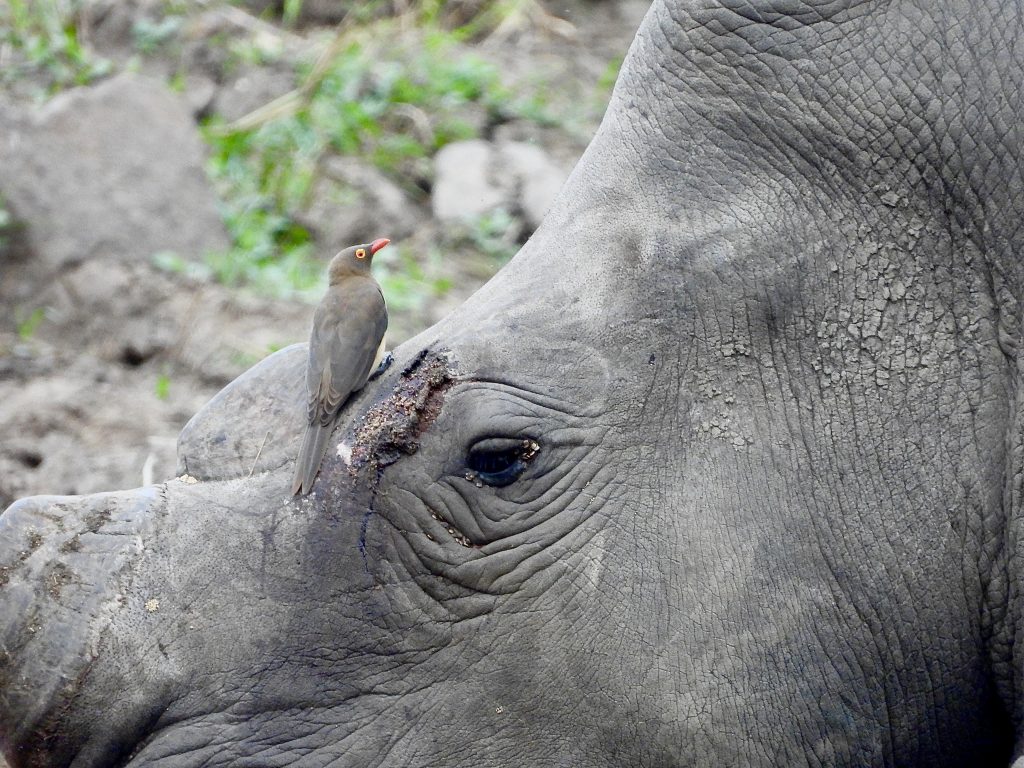
In the wilds of Africa, every species plays a role in a delicate ecosystem—none more fascinating than the oxpecker, nature’s own pest controller. These small birds, part of the starling family, are often seen perched on buffalo, giraffe, and rhino, feeding on ticks, lice, and other parasites. Beyond the quirky safari sight, oxpeckers are critical to wildlife health and conservation success stories across Southern Africa.

Why Oxpeckers Matter
Oxpeckers provide a mutualistic service to their hosts, reducing parasite loads and lowering disease risk. They even act as early warning systems—alerting animals to approaching predators. Roosting in tree hollows and under bark, these little birds are a hidden but essential part of Africa’s bushveld ecosystem.
The Downfall: What Went Wrong for Oxpeckers?
Despite their usefulness, oxpeckers faced a dramatic population collapse in the late 19th and early 20th centuries. Here’s why:
-
Overhunting of big game reduced the number of wild hosts they relied on.
-
The rinderpest outbreak, which devastated Africa’s wildlife populations, removed even more hosts.
-
Turning to cattle as an alternative, oxpeckers unknowingly encountered a deadly threat: arsenic-based livestock dips. These chemicals poisoned the birds when they fed on treated parasites.
By the mid-1900s, the red-billed oxpecker had disappeared from many regions, surviving only in isolated protected areas. The yellow-billed oxpecker fared worse—vanishing entirely from South Africa.
The Recovery: Conservation in Action
The turning point came with two major changes:
-
Arsenic dips were banned and replaced with safer alternatives.
-
Private game reserves began restocking wildlife, providing suitable hosts for oxpeckers again.
Efforts to reintroduce oxpeckers started in Zimbabwe in the 1960s. It wasn’t as easy as hoped—animals unfamiliar with the birds panicked when they landed on them, running or rolling to shake them off. But with time, trial, and more research, the first successful reintroduction happened in 1975.
In South Africa, the real breakthrough came in the 1980s, especially through the Kruger National Park, which became a hub for oxpecker relocation. Over 1,300 birds were translocated to reserves in KwaZulu-Natal, Limpopo, Mpumalanga, and the Eastern Cape—where they quickly settled and flourished.
Behind the Scenes: How Do You Reintroduce Oxpeckers?
Rewilding birds isn’t simple. Oxpeckers proved aggressive during nesting and had complex social structures. Initial attempts saw fatalities until conservation teams adjusted protocols—separating birds during breeding and avoiding mixing individuals from different regions.
Feeding them in captivity was another challenge. Two solutions emerged:
-
Rotating livestock (like donkeys) through aviaries, letting birds feed naturally.
-
Providing fresh blood in bowls, bypassing the parasite entirely.
And the birds adapted. Interestingly, oxpeckers perched on wild animals give alarm calls, while those on livestock remain silent, suggesting an evolved understanding of threats in their environment.
Oxpeckers Today: A True Wildlife Comeback
Today, both red-billed and yellow-billed oxpeckers are thriving in parts of South Africa and Zimbabwe. Their presence in safari destinations like Kruger National Park and private game reserves is a testament to what’s possible when conservation, science, and land stewardship come together.
Sightings are becoming more frequent, even in areas where these birds hadn’t been seen for decades—a promising sign that the ecosystems they once helped balance are bouncing back too.

Why Their Story Matters
At Wandering Thru, we believe in sharing the stories that highlight the power of responsible travel, rewilding, and conservation. The return of the oxpecker is more than a win for one species—it’s a symbol of what happens when people and nature work together.
So next time you’re out on a game drive and spot a little bird hitching a ride on a giraffe or buffalo—know that you’re witnessing a conservation success story in motion.
Interested in spotting oxpeckers on your next safari?
Explore our curated experiences in Kruger National Park, Hwange, or South Luangwa, where you’ll not only see the Big Five but the small, essential species that hold the ecosystem together.