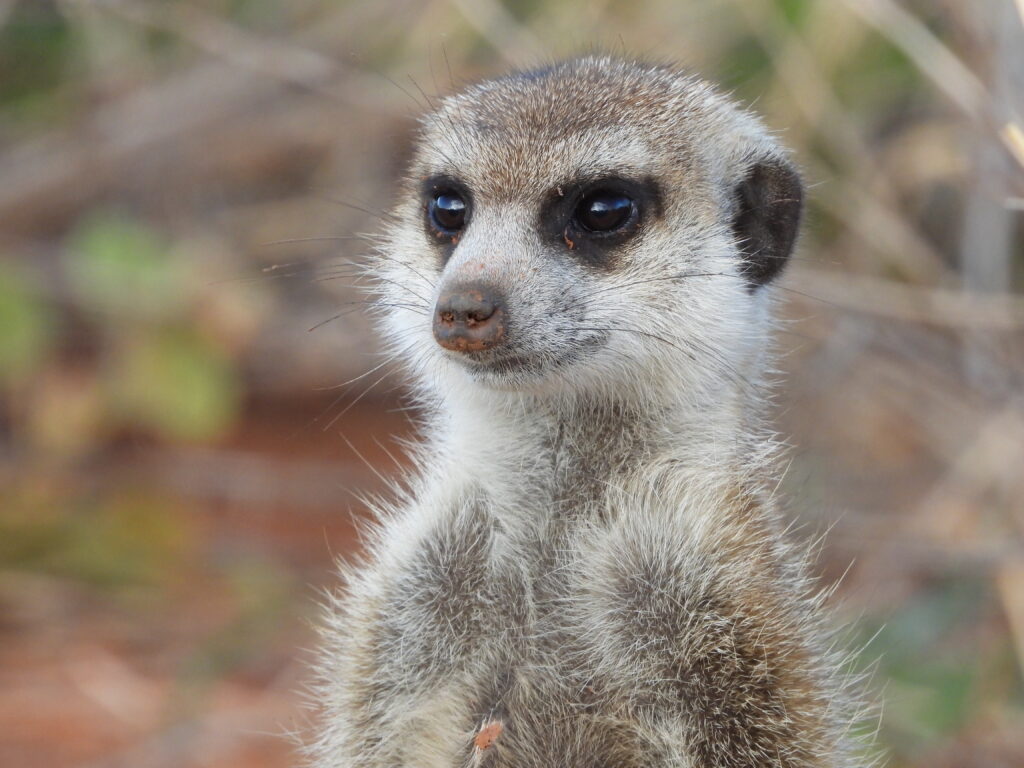
Tswalu Game Reserve, situated in South Africa’s Northern Cape province, lies within the Greater Kalahari region. Combining the Korannaberg Mountain Range and the rolling red dunes of the Kalahari sands, the reserve boasts an astonishing array of wildlife. Among these, desert black rhinos, Kalahari dark-maned lions, pangolins, Cape foxes, and aardvarks stand out. Yet, my focus isn’t on these larger creatures; it’s on the Mokala family, a special group of suricates, also known as meerkats.
The Mokalas, named after the Camel Thorn Tree in Tswana, constitute one of three habituated meerkat families within the reserve. While numerous other families inhabit the property, the primary research revolves around these families. Their familiarity with human presence makes them approachable on foot, providing an opportunity for incredible viewing and photography. Remarkably, their routine remains uninterrupted, as they continue their daily activities as though we’re invisible.
The prime times to observe the Mokalas are early mornings and evenings, when the group congregates around their burrow system, either preparing for the day or winding down. Their emergence and return timings depend on various factors, with weather conditions playing a significant role. Cold or overcast weather might delay their appearance. Adult meerkats determine the optimal time, and eventually, the entire group emerges to bask in the sun’s warmth.
Each family maintains multiple burrowing systems throughout their territory, rotating between them every few days. These systems, often repurposed from ground squirrels or springhares, are continuously renovated and expanded to accommodate the meerkats. Emergency entry and exit holes are added to the system. Occasionally, they share the burrows with ground squirrels, though the squirrels are usually ousted when the suricates move in.
The presence of predators also influences their behavior. Once, a honey badger traversed the burrow system early in the morning. We inferred this from the tracks. Consequently, the family delayed emerging from their burrows by almost an hour, ensuring the threat had passed entirely and wasn’t lurking nearby.

In a meerkat family, a clear hierarchy exists, characterized by a dominant female and her partner assuming leadership roles. The remaining group comprises their prior offspring and sporadic immigrants from other groups. Solely the dominant female participates in breeding, while the other members assist in rearing the young. This year, the Mokala family welcomed a litter of four offspring. Even at a tender age, a hierarchy emerges among the youngsters, often revealing the presence of a runt.
Mornings witness the young ones emerging from the burrow system last, opting for a bit of extra sleep. Simultaneously, this provides the adults an opportunity to survey the surroundings for potential threats. Upon emerging and fully awakening, their hunger becomes evident, triggering their pleas for sustenance. The young ones employ chirping sounds to beseech the adults for food. The adults promptly respond, initiating foraging around the burrow. Soon enough, substantial grubs, beetles, and grasshoppers are offered to the juveniles.
Each young meerkat trails a designated caregiver for the day. This guide serves not only as a source of nourishment but also imparts knowledge on locating and acquiring food independently. Much of their food is secured through digging, making the ability to locate subterranean items crucial. Lessons encompass managing various foods, such as scorpions, which are neutralized by a swift nip to the tail, disabling the perilous sting before devouring the crunchy meal.
While this was going on, one of the adults would climb a nearby shrub or tree and keep an eye out for any immediate dangers. He would act as a sentinel for the group, watching the skies for birds of prey and the ground for Cape cobras or jackals.
While watching the Mokalas in the mornings, we would sit around the burrow system, and they would come all around us, often foraging right next to us, digging away with not a care in the world but finding breakfast. After about half an hour or so of this thought, they would start to slowly push away from the burrows and head out on the daily forage. It would only be once the group had moved off and another sentinel was in place that the first watchman would descend his tree, catch up with the group, and have a chance to find his breakfast.

Keeping pace with the group once they depart the burrow system proves challenging due to their rapid and methodical movements. We would let them go and then speculate about which burrow they might choose that night, attempting to intercept them there in the late afternoon.
The burrow systems were relatively close together, making it a quick task to locate them (assisted by the exceptional researchers). During this period, the family winds down, and a sense of relaxation prevails. Grooming becomes a prevalent activity, fostering stronger social bonds among group members. Much like in primate behavior, allogrooming plays a crucial role among suricate families. Some individuals engage in their final feeding, while others bask in the sun, absorbing its warmth before the frigid desert nights descend.
At the burrow systems, occasional interactions unfold between distinct family groups, given the premium value of well-positioned burrow systems in the suricate domain. Typically, conflicts find resolution without resorting to physical clashes, as the smaller group gauges the situation and retreats. Nevertheless, intermittent skirmishes do flare up, displaying intense aggression. On occasion, these clashes can escalate to a fatal outcome if a member becomes targeted by another group.
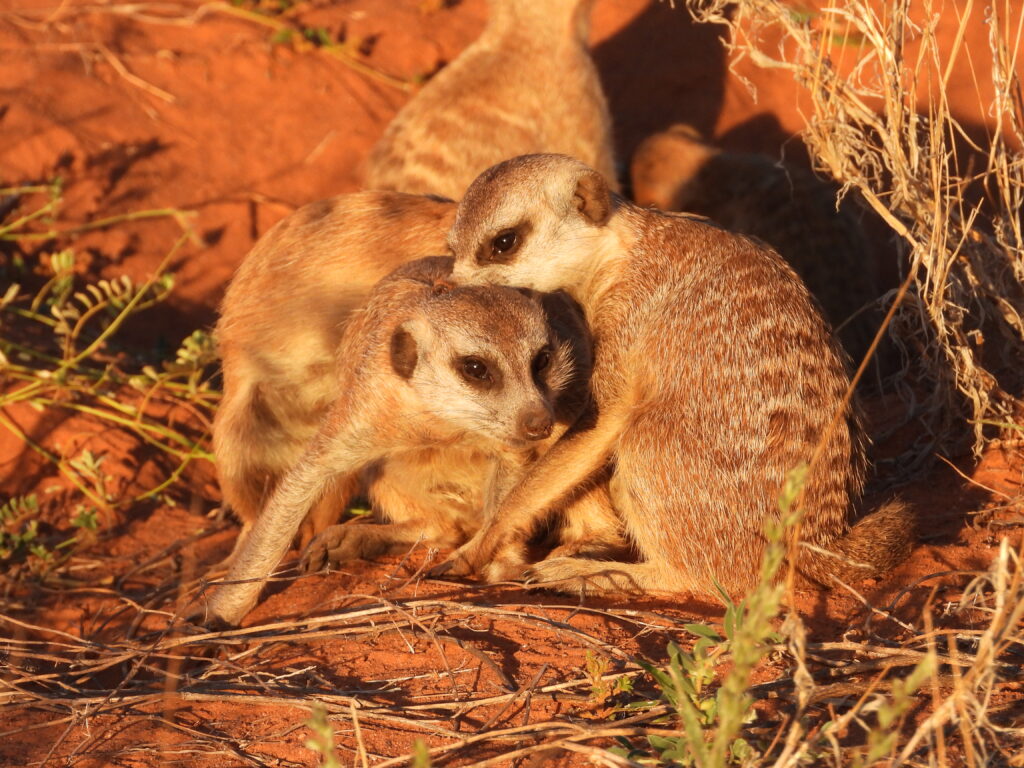
I will be heading back to Tswalu a few times this year. It is going to be interesting to see how the four youngsters get along. They’ll have many factors to overcome, including a very cold winter and many predators that’d happily snap one of them up given the chance. With a strong family unit like the Mokalas, they stand a very good chance of making it, and in time, it will be their turn to help raise the next generation.
To secure your best African Safari, contact Wandering Thru without delay.