Africa has long captivated people with its birds of prey. Known for their speed, keen eyesight, and majestic appearance, these raptors feature prominently in African folklore and culture. From eagles to hawks, harriers, goshawks, and falcons, the skies are full of fascinating predators—but none command as much awe as the Martial eagle.
The largest eagle in Africa, the Martial eagle dominates open savannahs and arid landscapes, though its range has diminished over the years due to habitat loss and persecution. Let’s take a closer look at this king of the African skiesand what makes it so remarkable.
Origins of the Name
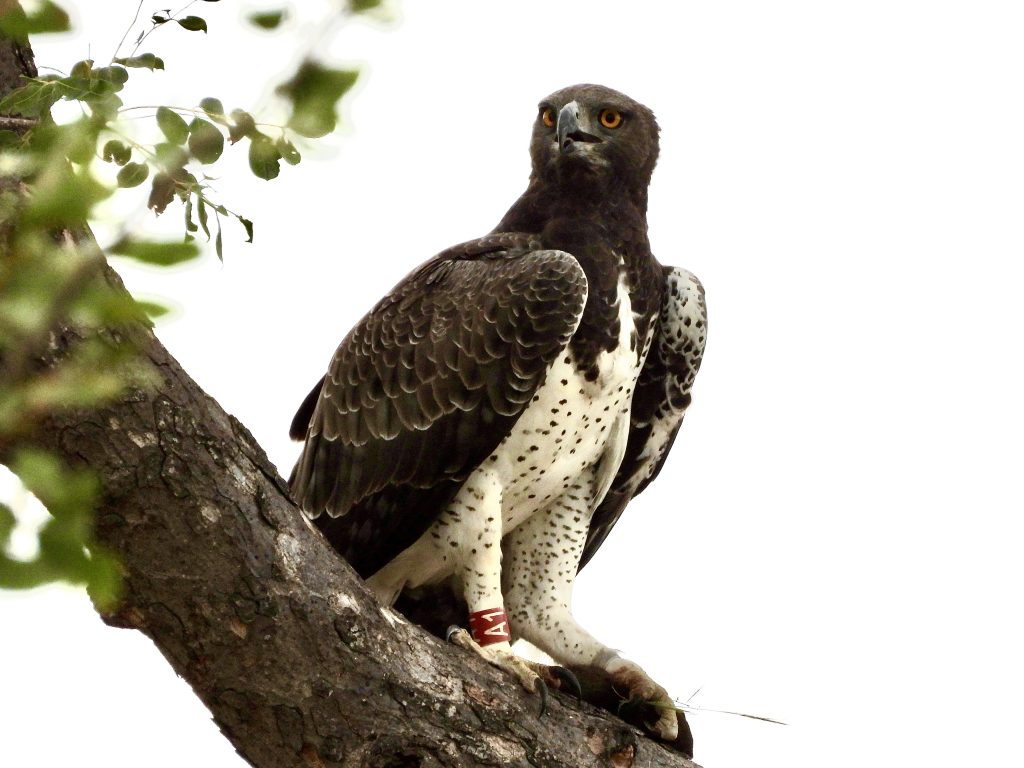
When the wings of the eagle are folded, give the impression of someone with large broad, heavy shoulders. The long legs and lethal talons give them a tall, bold stance, proud in appearance. The fiery yellow eyes look straight through you and the broad flat head has a short crest. With the dark brown and white feathering on their bodies, they look like they are in smart uniform. Along with all of this and their fierce appearance, they have got their military like common and scientific name. Polemaetus is a combination of the Greek words for ‘war’ and ‘eagle’ and bellicosus is the Latin word for ‘war-like’.
Hunting and Diet
Even though they are the largest and heaviest eagle, they have master the act of hunting from wing, or even using the landscape to conceal themselves before swooping in for their attack. With an incredible crushing power of around three tons (6500 pounds) of crushing power in their talons, there are few animals that can get away once they are caught. People are often surprised by this power, but it is necessary. If you are going to be hunting animals that could injure you, you need to kill the animal on impact. Otherwise the prey could do damage to the bird itself, grabbing hands of monkeys can break wings or do damage to feathers.
Martial eagles, like most of our eagles, have incredible eyesight. They use height as an advantage when hunting like some other birds do and so are very seldom seen hovering to scout for food. They are such large birds that they would be easily spotted. They have been recorded spotting prey from over five kilometers away and then setting up the hunt and ambush from that sort of distance. Game birds, small mammals and large lizards generally make up most of their diet. It is not uncommon to find them with a monitor lizard kill, with impala lambs and warthog piglets making good snacks for them as well. If large prey animals are killed, the eagle will feed on the ground, often staying close by and feeding over a few days if the carcass is not scavenged on. Hyena and even leopard have been known to scavenge from them when they have killed something like a young impala.

Breeding and Raising Young
Martial eagles are monogamous and pairs will hold and defend territories together. In some areas, territories can be as much as 65 000 hectares (140 000 acres). This will all depend on food availability, if it is enough to sustain the pair and any chicks they may look to raise. Eagles will sometimes overlap on the borders of their territory, but the core of the territory will be protected and this is where the pair will build their nest and breed.
Once a pair has gone through their courtship ritual, made up of calls, aerial displays and the males presenting the females with food, will they breed. Unlike most eagles that lay two eggs, Martials will only lay a single egg. The female is the only one that sits on the egg to incubate it and this takes around 47 – 53 days. Whilst she is performing this important role, the male will bring food to her. When a chick hatches, it is again the father that brings the food to the nest, but the mother that feeds the chick. The chick then stays in the nest for a further 3 – 3 and a half months before it takes its maiden flight. They are then still looked after and fed by the adults for a further 6 – 8 months.
This is why these eagles and many others, only breed every second year, as from start to finish of raising the chick and fledging it, could take just over a year. The year off gives the adults a chance to simply have a break.
Immature birds
Young Martial eagles spend the off-year in their parents’ territory, learning hunting and survival skills. While they reach adult size early, full adult plumage takes 7–8 years, marking sexual maturity and readiness to establish their own territories
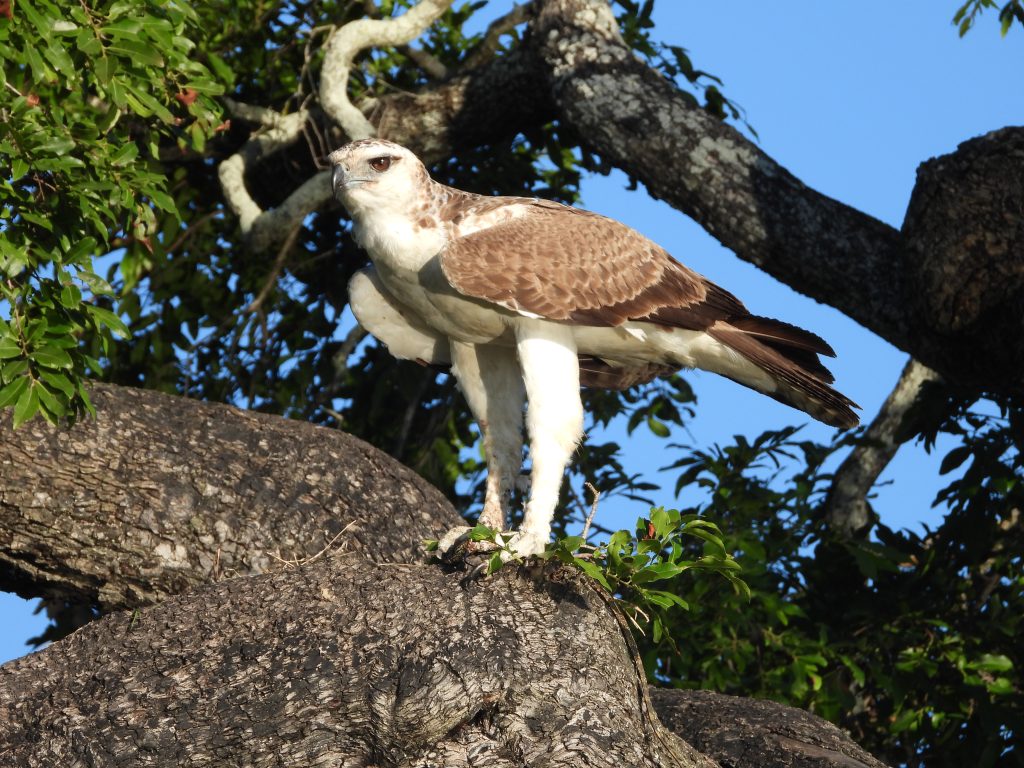
Known as the “lion of the skies”, Martial eagles are vital apex predators in African ecosystems. Conservation efforts are essential to ensure these magnificent birds continue to soar above the savannah. On your next safari, don’t just seek the king of the jungle—look up for the king of the sky.