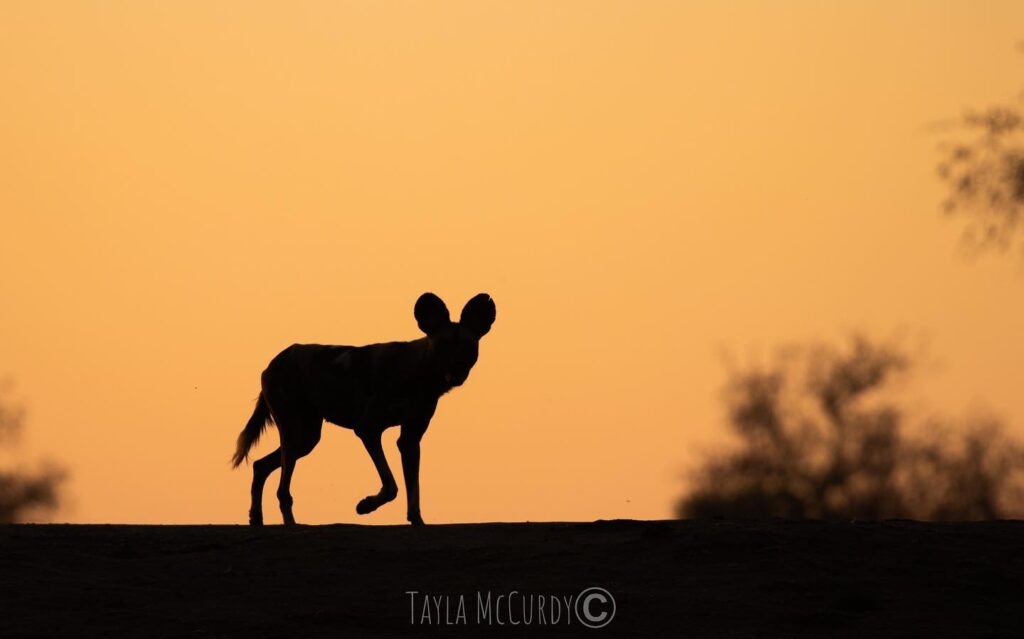
Yesterday, we celebrated World African Wild Dog Day, one of the most endangered carnivores on the continent. Many people come on safari and have never heard of this animal, as people often focus on the Big Five. This, though, is an incredible animal that is unfortunately under massive threat because of people and the conflicts that happen between the two species. It’s sad to think that one of the most successful pack animals in the world is in trouble because of us.
Up until the early 1970s, wild dogs were even persecuted in protected areas by rangers and wardens as their hunting and killing techniques were said to be inhumane. Rather than stalking and asphyxiating (starving the oxygen flow) like the big cats do, wild dogs run the animal until it is exhausted and then disembowel the prey. If you have ever been a witness to either of these, you will see that asphyxiation can take long periods of time, even up to 15 minutes. With the disembowelling, it is over in a minute, so which is more inhumane? Fortunately, people realised the importance of dogs in the ecosystem, as they often take down sick, weak, or injured animals. The killing of the wild dogs was stopped, but the damage had already been done to their numbers.
Wild dogs have huge home ranges and move around massive areas. This is not good for packs that live in smaller reserves or live close to reserve boundaries. It means that they will often venture out of protected areas into adjacent farmlands. Wild dogs are built to hunt fast, agile prey. When they come across domestic livestock like sheep and goats, they can cause damage as it is easy pickings for them. This does not go down well with the farmers, as they can lose their livelihood. The Endangered Wildlife Trust (EWT) in Southern Africa and, in particular, Grant Beverly, has worked incredibly hard with farmers to try and find ways of stopping this. Luckily, a lot of farmers now have a lot more of a positive outlook on the dogs, but it is not always the case.
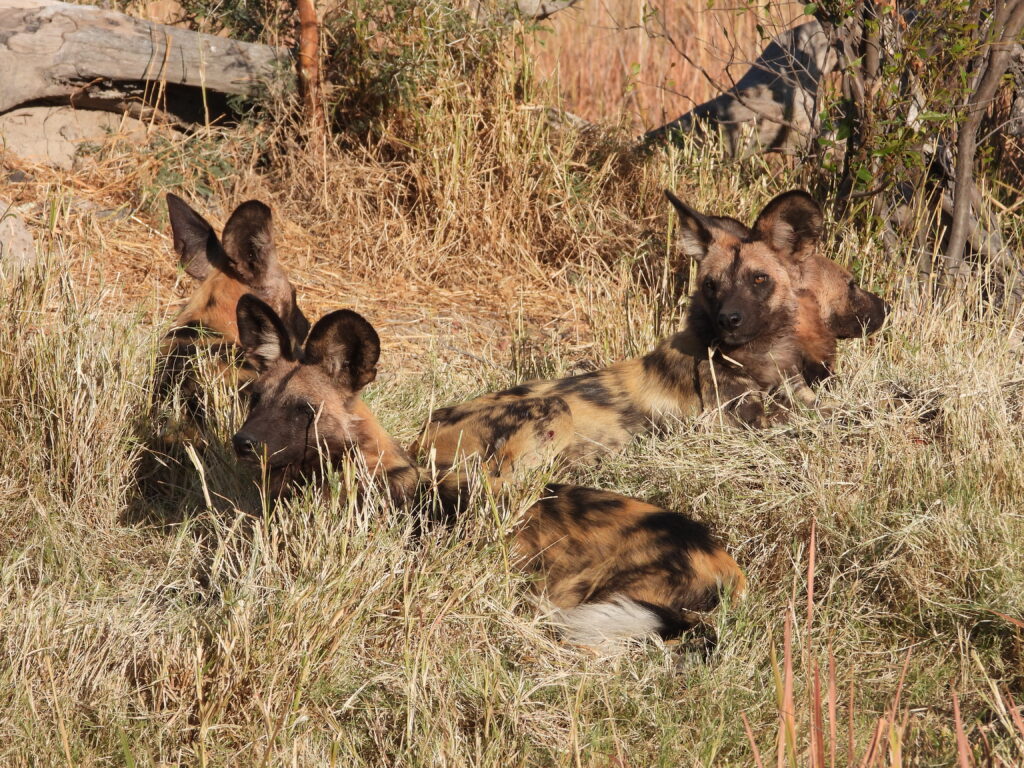
Other big problems come from the communities that often border the protected areas. People keep domestic dogs as pets, and sometimes diseases like rabies and canine distemper come with this. If a wild dog somehow manages to pick up one of these viruses, an entire pack can be wiped out.
Also, there is often small-scale poaching that comes with the villages. What small-scale poaching means is subsistence poaching—people poaching for food. Snaring (wire traps intended for strangulation) is the most commonly used trap. Small antelope are the intended targets of these poachers, but other animals are often also caught. Wild dogs move through the same areas as these small antelope, often trying to flush them out of their hiding places. With this, we are finding more and more dogs being snared. Sometimes the unfortunate dog dies at the spot where it was snared, but they are often strong enough to pull themselves and the wire snare free. This is again when Grant and the vets get involved, often with the help of guides or members of the public who have spotted these animals. This sounds easier than it is, as the dogs move with the pack and have often moved a huge distance from where they were originally reported. Fortunately, the guys have done phenomenal work, and a lot of dogs have been saved.
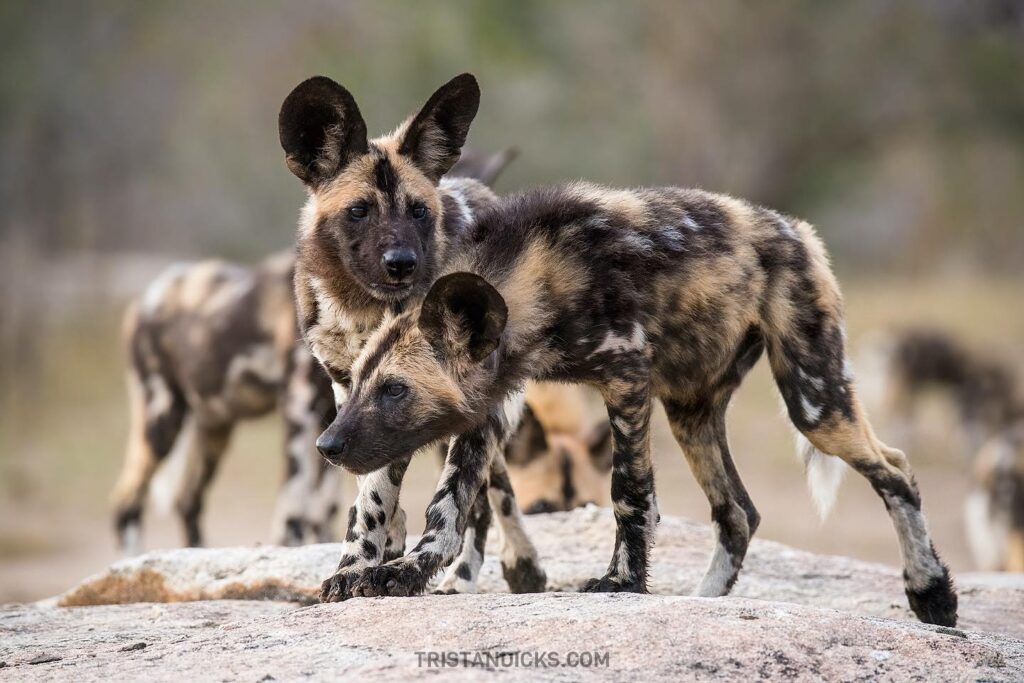
EWT tries to fit a GPS tracking collar on at least one member of a wild dog pack. At first, this was for research purposes, but it is now helping the guys find animals that are caught in or have been injured by a snare. People often ask about these collars and whether they affect the dogs and their movements. It most certainly does not, and these collars are saving a lot of lives at the moment.
On a more positive note, though, these GPS collars have given us some amazing insight into the wild dogs that we never had before. A lot of research has been done, and the EWT’s ongoing research has produced outcomes that go against a lot of the facts we grew up learning about wild dogs.
Over the years, we have been told that wild dogs were the most successful of the hunters, with an 80% success rate, in comparison to lions and leopards, who are known to only have about a 20% success rate. A small accelerometer was added to collars on the dogs, which allowed researchers to record whether the dogs were running, feeding, or if they were static. The findings were quite remarkable. Wild dogs have actually had the same or similar success rates as big cats. The difference being that the big cats could only make one chase and then need to rest in order to recuperate energy. The dogs with their stamina, on the other hand, could chase again and again until they were successful, sometimes taking four or five attempts. This means that they had an 80% success rate in multiple hunting sessions rather than single chases.

Another finding is the fact that dogs are moving between packs and forming in new and different ways than originally believed. We were always taught that only one dominant pair would do the breeding and that if a Beta female did have puppies, the Alpha would kill them. While this still remains true and has been recorded, recent research has also shown that Alpha female will occasionally allow the Beta pups to survive and even integrate with her own puppies. This is usually the case when the two females are sisters. As we’ve so often said, animals don’t read books, and all scenarios are handled differently by different individuals and groups, regardless of species.
These are just two of the many mysteries that the researchers have discovered. It’s just a pity they are now spending more time looking after snared or injured animals, but hopefully this will change again. To find out more about what EWT does and to see if you can help, have a look at their website, www.ewt.org.za or contact Grant, grantb@ewt.org.za
If you’d like us help with the ongoing expenses of the de-snaring operations in the Great Kruger, please consider donating to the WanderingConservationFund here