Hwange National Park is found in the north-western parts of Zimbabwe, very close to the Botswana border. Hwange itself covers around one and half million hectares and so is just under a third of the size of Kruger National Park. As with Kruger, Hwange does have the opportunity to grow and also join up with other parks and reserves. As long as Zimbabwe and Botswana can keep good relations between the two nations, opportunities are there, with Moremi National Park being directly west of Hwange.
Brief History
Hwange was set up and proclaimed in 1928, mainly because this massive wilderness was thought to be useless for anything else. Unfortunately most of the areas animals had been hunted out and there were small pockets of the native San or Bushmen people left. The next two decades were dedicated to construction of road networks and building infrastructure. In all this time, foot and horseback patrols reported back that there was unfortunately still very if any animals encountered on their excursions.
As time went on though, Hwange increased in size as neighbouring farms were slowly incorporated into the existing park. It was only in the late early 1930’s and early 1940’s that boreholes were installed within the reserve and this seemed to be the turning point. With the water, came the animals and it was from this point that the animal numbers started to increase again, all be it slowly, in the area. Hunting in the park was no longer happening and so wildlife also learnt that it was a safe haven for them.
Habitats
The area is mainly classified into two main habitats, mixed woodland and the other, open savannah. With over 250 tree species and 200 species of grass, there have been over 1050 different species of plants recorded. With this large diversity of vegetation, a large diversity of herbivores can be supported.

Kalahari woodland can be found over as much as two-thirds of the parks area. These areas have deep soils and so trees can grow well with large root system space. Zambezi teak is the most dominant of the tree species found to make up the stands of woodland and open woodland. Grasses and lower shrubbery also do well in these areas. The Kalahari sands are incredibly loamy and for open grasslands and form vleis during the rains.
Mopane woodland makes up the rest of the Hwange and dominates the northern section of the park. Depending on the soil depth in these harder soil areas, depends on the sizes of the trees again and so some areas, the Mopane have a stunted growth. Mopane is very important for game species during the dry times of the year and a major attraction for the elephants.
Riverine vegetation and grasslands make up the remaining habitats in the park. This all depends on where the rivers flow and where open areas can be found. Large trees can be found along these river courses with dense undergrowth, supporting its own diversity of animals.
Wildlife
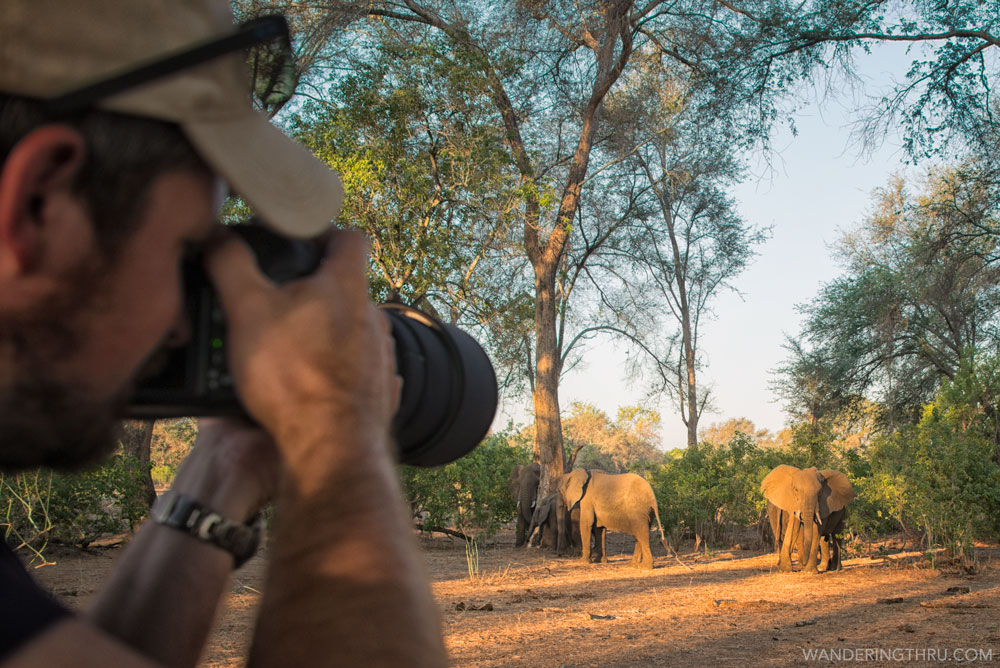
Hwange is most famous for its elephants, which makes sense as they generally dominate the environment, with some herds still exceeding over a hundred individuals at times. These almost “Super Herds” occasionally come together during the wet season when vegetation is at its best and can support the large herd moving together. Back in the day, elephants were also brought in and introduced from other areas as more space was needed for farming. It is thought that there are almost 40 000 elephants in the area.

There are a further 107 recorded mammal species and with the migratory birds included, there can be as many as 410 bird species. With the artificial water that is provided in the area, most of the mammals will stick around for the whole year, congregating around these reliable water sources in the dry periods.
All of the big cats can be found in the area, with a good amount of lion now present in the reserve. Wild dogs and all of the smaller predators are all to be found as well. Special antelope species also occur here, with herds of eland, Sable and Road antelopes moving through the park.
Weather
As with most of Southern Africa, this area of Zimbabwe has its dry season during winter and the rainy season during summer. Winter months run from around May to August and summer October to March. During the dry time, even though it is winter, daytime temperatures can range between 25-28 degrees centigrade. Temperatures at night can get down to a chilly 3-5 degrees centigrade at this time though, with ground frost occurring and black frost every few years.
In late October the winds shift and this is what brings the rains in, with the rains arriving in November. Summer temperatures usually find themselves between 32-36 degrees centigrade, but can also push into the early forties. As with most of Southern Africa, over the last few decades, drought and big rains both being experienced. It is most certainly not reliable, but the average rainfall sits at around 620-640mm a year.
Tourism
As with all of our reserves in Africa, especially the National Parks, tourism brings a large percentage of their funding. With the park being as large as it is, it can cater for the general public and also for people looking to disappear into a quieter area, enjoying the wilderness to one’s self. Most of the lodges have been built with waterholes in front of them and so just sitting watching them will often reward you with an elephant coming to quench its thirst.
Visiting Hwange as a safari destination as it also puts you in touching distance of some of Zimbabwe’s other famous sites, like Mana Pools and Victoria Falls, one of the world’s seven natural wonders. It is also very close to Botswana, make an easy hop over to both Chobe, Moremi and even the Okavango Delta also within easy reach. In saying this, Hwange itself is a very special area and reserve and should most certainly be paid a visit for someone is looking for a different experience.