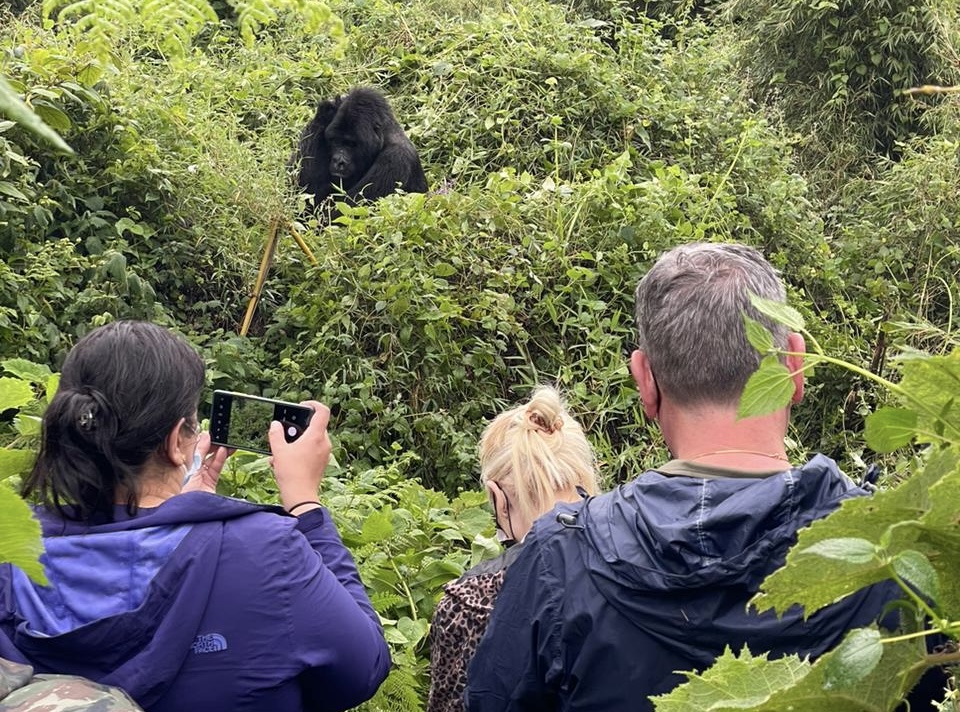
Experiencing Mountain gorillas on foot, whether it be in Uganda or Rwanda, must be one of the most incredible safari experiences out there. It is always amazing having a lion, leopard or elephant walk past your vehicle, but seeing these Great Apes on foot is just something else. Yes, it is on foot, as penetrating into the rain forest where they are to be found, is damn near impossible. People often forget that the gorillas are found in a rain forest and so even in the “dry time”, there is still a good chance that you are going to get wet at some point.
When you are preparing for this trip, it can be quite daunting as to what to pack and what to expect. We are often questioned as to what to do and what to take and so we’ve come up with a list of things we think are necessary to take with. Some things on the list are not a complete must, but are there for some people as it makes this experience just a little more comfortable and do able.
Camera
Getting pictures of these amazing animals is something that everyone wants to get and fare enough, that is why we are here, but just a few things to keep in mind. Some treks can be quite some distance and so the size and weight of your camera must be taken into account. You may have to lug it around for a few hours, so make sure it is something you can carry and handle while you trape through the forest. It is not always the best taking a large zoom lens, as you often get quite close to the animals and so a mid-zoom lens is sufficient. There are guides and porters that can assist you at times, but they are not always available. Keeping the camera dry is another must and so waterproof covering or bags will help keep it dry.
Waterproof backpack
A descent sized waterproof backpack is a real big winner here. This way you can keep things like cameras, binoculars and snacks dry. Gives you a place to store that extra waterproof clothing you don’t need at that moment and then also gives you somewhere to keep extra drinking water. Although it is quite cool in the forest, you still need to stay hydrated and it can get very humid and so you sweat without feeling it, especially in the rain. A descent sized camel-pack always works really nicely.
Clothes
As with all safaris, whether on the savannah or in the forest, neutral coloured clothing is the best. Bright colours do make you stick out and may even attract attention from some of the insects you would rather avoid. Easy breathing, quick drying, long sleeves and long pants are recommended. This helps keep some of the nasty vegetation and biting insects off, it also allows you to tuck your pants into your socks. If you are a person that does not like wearing longs, it is suggested to at least wear long pants as you hike through the forest undergrowth.

To be safe a light rain coat and even light waterproof pants that are easy fit over your existing clothes can be a help. These are easy to store in your back pack. In the forest it will be dry and clear one minute and the next there’s a torrential downpour for twenty minutes before it is clear again.
Shoes for feet and hands
When you choose your shoes for this trip, make sure they are comfortable, non-slip, waterproof and have ankle support. It is always a good idea to have walked in these shoes before as the last thing you need are blisters while hiking in the forest. Waterproof shoes are also a good idea, as wet socks and feet can be uncomfortable to hike with too. Good pairs of boots these days usually cover all of these categories for us. Luckily, as muddy and wet as they get, the lodges clean them up for you after a trek.
To go along with your boots, a pair of gaiters comes in really handy. Gaiters will help keep mud, grass seeds, insects and sand away from your ankles. They also protect the socks that your long pants are now tucked into!
Some people prefer having gloves with them as well, especially if they are going to be holding on the vegetation. This one certainly isn’t a must and is self preference. A good pair of hiking gloves or even gardening gloves can work nicely and are sufficient to deal with the forest undergrowth.
Head and eyes
A hat is always a good idea, helping keep rain out of your eyes or the sun off of your face if it sneaks through the canopy of the forest. For people with long hair, a good hair tie will be useful, keeping hair up and out of the way, especially when viewing the gorillas.
If you are someone that needs prescription glasses, a good suggestion would be to try and do contact lenses instead, even if just for the trek. Glasses can be difficult in the rain and also mist up in the humidity. You don’t want to have to constantly wipe your closes while you trying to keep up with the gorillas if they are moving. Sunglasses, especially polarised and UV protection can help nicely though when not raining.

Extras
A walking stick is always a good thing to have on any hike. A good fold up stick can be a good support when needed and can also help undergrowth out of the way if need be.
Water as mentioned earlier is essential, keeping in mind you will have to carry it with you in your back pack and so water bottles and camel packs are best. The lodge you are staying at will most likely give you something to snack on, whether it a granola bar, fruit or nuts. Always good to have incase the trek turns out to be a lot longer than you expected and you will be burning some energy while hiking.
What not to bring…
Expectation. If it is your first gorilla trek, go with no expectations, as every single time is different, from one trek to the next. One thing though, is every single one is unique in its own way and what one may experience, another will not. From the gorillas themselves, to the giant trees in the forest, to the bird calls in the canopy and butterflies around puddles, enjoy it all. Now you can do it in prepared comfort too.