The jaws of predators are the most important weapon and tool that they have and use. From killing their prey, to dragging and hoisting, to ultimately feeding, it all comes down to their mouths. People are often surprised at the sheer crushing power of a hyena, or a leopards ability to hoist an impala up a tree, whilst holding it in its mouth. They have adapted over time to the animals they hunt and the way in which they feed on them.
Number of teeth
The number of teeth a carnivore has, varies from species to species. Cats usually have 30 adult teeth, hyena 34, mongoose and the likes 40 and dogs 42. This is not set in stone though and can be a little different. Insectivorous species like bat-eared foxes can have between 46 and 50 teeth. A honey badger usually has 32 teeth, but the number of teeth can be different between sub-species and even between left and right jaws of some individuals. As with some people they vary as well.

Shapes and sizes of teeth
The biggest differences among carnivores is in the size of their teeth, which is related to the size and power of their prey species. Insectivores generally use long sticky tongues to lap up large amounts of tiny insects, such as ants and termites. Their teeth don’t have to be large and so they have small teeth that look like hollow stumps. Enlarged surface areas to their cheek teeth help them crush the insects, but their fangs are too small and weak to catch and asphyxiate (suffocate) larger animals.
Cats have the largest of the canines, which are used to grab, hold on to and then asphyxiate their prey. It wouldn’t help a lion if had small canines when trying to asphyxiate a buffalo bull that has a dewlap protecting its throat. Leopards will sometimes pierce the animals skull, driving the canines right through the bone. This kills the prey instantly and minimises the risk of injury during a struggle or the animal making any noise and alerting other predators of the kill.

Modified molars
Cats and dogs have the same number of incisors and canines, but cats have fewer premolars and molar teeth. Most carnivores have large cheek teeth called carnassials. These are the last upper premolars and first lower molar teeth, which have razor sharp edges. These teeth work like scissors like scissors, cutting through skin and shearing off chunks of meat which are then swallowed whole. Dogs usually chew their food before swallowing and have less developed carnassials than cats.
The third upper premolars of most carnivores has an extra feature, an anterior cusp which helps them crush bone. Hyenas have very large anterior cusps, along with incredibly strong teeth, helping them to chew and digest bone. Strong teeth and neck muscles also allow hyenas to tear open thick skinned animals, a food source that takes other carnivores or scavengers time to get too. This also allows for a hunting strategy hyenas will use, where one animal will grab onto and anchor a large prey species, while the rest of the clan rush in to help.
The tongue
The tongues of the cats are more evolved of any of the other carnivores. They are incredibly rough, which not helps with grooming. This is what keeps their coats in immaculate condition and helps remove a few of the parasites from themselves. Social carnivores like lions will often groom one another (allo-grooming), helping one another but also strengthening social bonds between the pride.
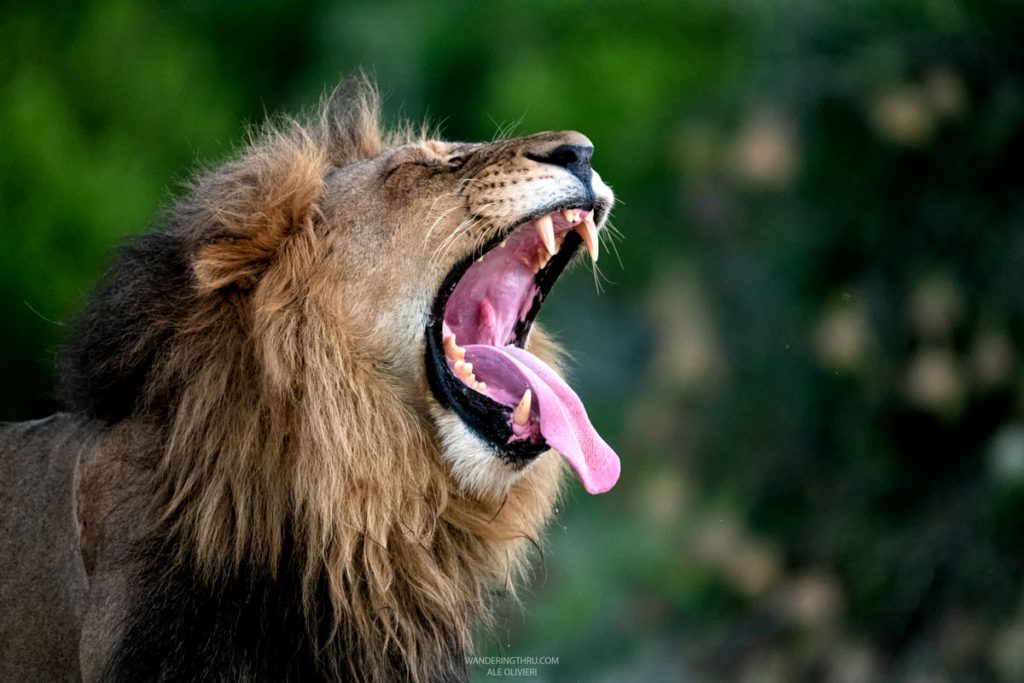
Also helps them lick flesh from bones and around joints where it can be difficult to get to. In this way they do not waste any food. Drinking isn’t the best though as they have to “spoon” water into the mouth with a backward facing tongue. They have to almost bit down on the water then to catch it in the mouth. Out of all the adaptions that cats have come up with, this is probably the least efficient. Dogs and hyenas will sometimes lap, but they prefer submerging the bottom jaw and drinking in that way.
The jaw muscles
All carnivores have two major jaw muscles. The temporal muscle, which attaches to the cranium and the masseter muscle, which attaches to the cheek bone or zygomatic arch. The sizes and attachment areas of the muscles depends on each species and their feeding habits. The temporal muscle is generally larger than the masseter muscle. The temporal muscle is what pulls the lower jaw up with great speed and power, this ensures for a firm grip on the prey. The masseter muscle is quite small in carnivores and mostly helps in holding the jaws closed and for chewing and grinding.
Cats and hyenas typically have very robust jaw muscles with large masseter attachments so that they can drag large carcasses. This helps lions drag carcasses into the shade or a leopard hoist a kill into a tree. Carnivores that feed on smaller prey or insects, have less developed masseter muscles because they consume their food very quickly.

Strongest jaws
Cats usually have much stronger jaws than the dogs, but even they do not compare to the hyenas. Spotted hyenas have the strongest jaws of not only the carnivores, but of all mammals. The only animal to have a stronger set of jaws is that of the crocodile. Along with their strong teeth and necks, hyenas have a bite force of about 750 kilograms (1500 pounds) per cubic centimetre in the mouth. This means they are capable of crushing every bone in the human body including the skull and the pelvis. Out of the big cats, leopards have the strongest jaws of the African big cats, but it is the jaguar of South America with the strongest.
Conclusion
The jaws of the carnivores have evolved in many special ways, from their teeth, to their muscles, allowing them to kill and feed themselves efficiently. With some of the strongest teeth and muscles, it allows them to do what they do best.