Feathers are unique to birds. Engineered by evolution, their extreme lightness combined with exceptional strength and flexibility make feathers perfect for an animal that flies. Bird feathers are incredibly diverse and specialised structures that play crucial roles in a bird’s life, including flight, display, and coloration. Understanding the anatomy, types, functions, and evolution of feathers provides valuable insights into avian biology and behaviour.
Anatomy of feathers
Feathers are composed primarily of keratin, a protein also found in hair, nails, and horns. The basic structure of a feather includes a central shaft called the rachis, from which arise barbs that branch into smaller barbules. These barbules have microscopic hook-like structures called barbicels, which interlock with neighbouring barbules, creating a sturdy and flexible vane. This intricate arrangement is crucial for maintaining feather integrity during flight and other activities.
Types of feathers
Contour feathers are the large, vaned feathers that cover a bird’s body, wings, and tail. These feathers overlap one another like the scales of a fish. They provide the streamlined shape necessary for efficient flight and help with insulation.
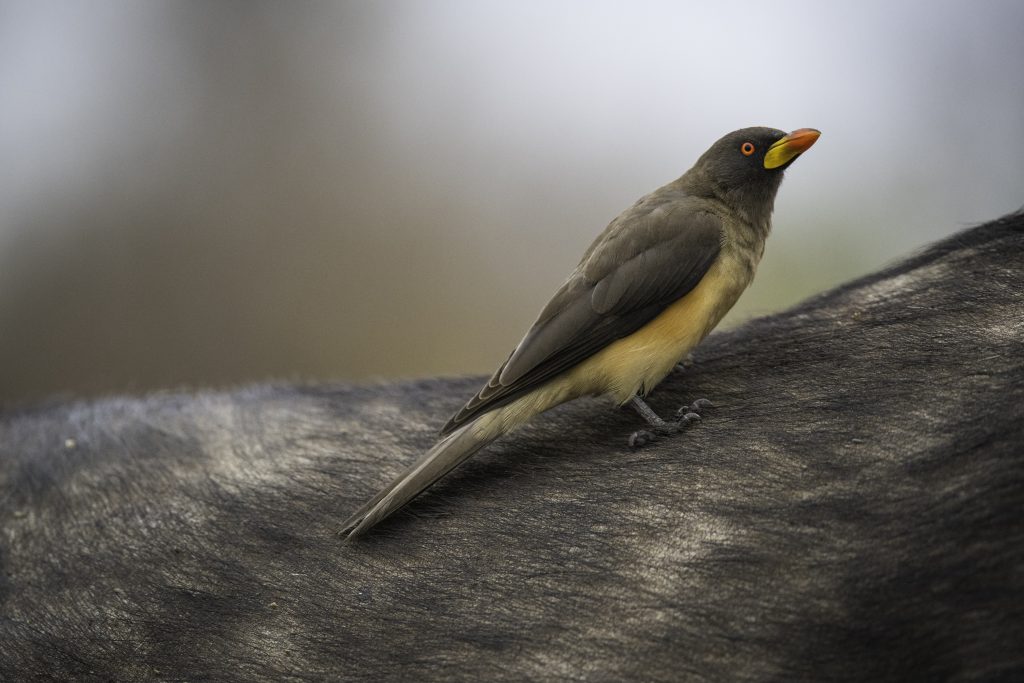
Flight feathers are found on the wings and tail. Flight feathers are specialised contour feathers crucial for generating lift and propulsion during flight. Some birds, like woodpeckers and oxpeckers, have evolved to have much stiffer and stronger tail feathers. This allows them to prop themselves up while feeding on a tree or larger animal.
Down feathers are the fluffy feathers that lie beneath the contour feathers and provide insulation by trapping air close to the bird’s body and maintaining body temperature. Natal down is the first covering of feathers to develop in young chicks.
Semiplume feathers have a combination of down and contour characteristics, providing both insulation and aerodynamic properties.
Filoplume feathers are small, hair-like feathers often found near contour feathers. They may play a role in sensory functions, providing feedback about feather position and condition. They also pick up vibrations and movement, controlling the contour feathers to respond.
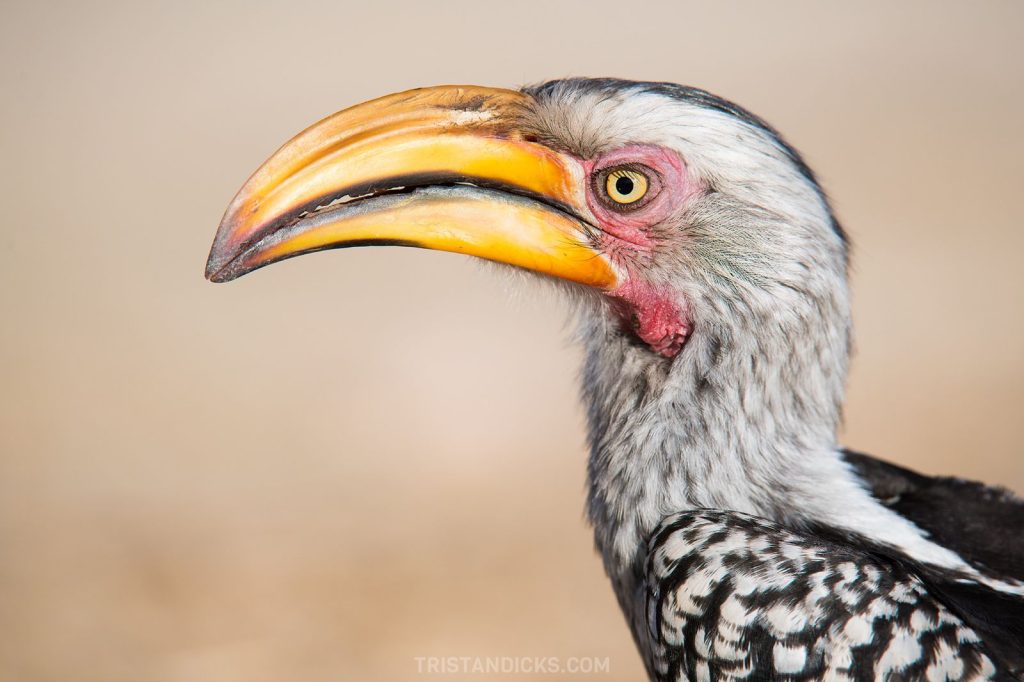
Bristle feathers are stiff feathers found around the eyes, mouth, and feet of some birds. They help protect sensitive areas and may aid in prey capture.
Flightless feathers, like those that are found on a common ostrich, are not designed for flight at all. Their barbules lack the hooks needed to bind them together into a smooth surface. This works out nicely for us, as it creates the perfect feather duster.
Functions of feathers
The primary function of feathers is to enable flight, allowing birds to take to the air. Flight feathers are lightweight yet strong, providing lift and thrust as birds beat their wings. Down feathers and other insulative feathers help birds regulate their body temperature, which is essential for surviving in diverse environments.
Many birds that need waterproofing have specialised feathers coated with oily secretions that repel water, keeping the bird dry. These birds trap air between their feathers, mainly the down feathers, which allows for buoyancy. This layer of trapped air acts in a similar way to air trapped in the hull of a ship, giving it the additional lightness needed to float.

Feathers play a vital role in courtship displays, territorial defence, and communication among birds. Elaborate plumage patterns, colours, and behaviours help attract mates and establish social status. Males of a few species change completely, either by colour or by growing extra feathers to show off to potential mates. Birds where both sexes look alike are generally monogamous. They have no need to look different to attract a mate; the pair will rather have a courtship display or duet they practice together, keeping their bond strong.
Coloration and pigmentation
Melanin, carotenoids, and other pigments produce a wide range of colours in feathers. Melanin can create blacks, browns, and greys, while carotenoids produce yellows, oranges, and reds. Apart from these two pigments, the only other feather pigments in the world are found in turacos. They have a red pigment called ‘turacin’ and a green pigment called ‘turacoverdin’. Some feathers appear colorful due to structural properties rather than pigments. Microscopic structures in the feathers, such as air pockets or ridges, can refract and reflect light, creating iridescence or metallic hues.

Feathers can be camouflaged to blend into their surroundings, aiding in predator avoidance or prey capture. The pearl-spotted owl has ‘eyes’ on the back of its head, or so it seems when you look at them from a distance. These are just dark rings of feathers. It is thought that these are against attacks from predators and birds that may attempt to mob the small owl. They are less likely to attack if they think they have already been seen or are being watched.
Birds can see ultraviolet (UV) light, which is invisible to humans. Some feathers have UV-reflecting properties that are used in mate selection and communication. Bronze-winged coursers have UV primary feathers that flash to their partner when they take flight. It is thought that they have this, not only to follow one another, but also so that birds can communicate silently, not giving their presence away to predators.
Evolution of Feathers
Feathers likely evolved from simple structures such as scales, with fossil evidence suggesting that feathered dinosaurs existed long before modern birds. Feathers initially served as insulation and later became adapted for flight, leading to the diverse array of feather types seen in birds today. It is thought that some of their ancestors gradually took to the trees, and the scales slowly elongated, becoming rudimentary feathers that may have helped them glide from branch to branch. The evolution of feathers played a significant role in the success and radiation of avian species, enabling them to occupy a wide range of habitats and ecological niches.
Conclusion
In conclusion, feathers are multifunctional structures that are central to a bird’s life. From enabling flight and insulation to displaying vibrant colours and patterns, feathers are marvels of biological adaptation and evolution. Studying feathers provides valuable insights into avian physiology, behaviour, and ecology, highlighting the intricate relationship between form, function, and natural selection in the animal kingdom.