As with all living things, food is a must! Birds have beaks of all shapes and sizes and we find that the shape and size of a beak or bill will give away what food sources that specific species relies on to survive. From a long slender bill of sunbird so that it can access nectar in a flower, to strong, thick, hooked beaks of a vulture, allowing it to tear flesh from a carcass. They all serve a purpose and so we are going to have a look at different beaks and bills and why each bird family has these. These adaptations have allowed birds to exploit almost every food source available.
Raptors
Raptors are the predators of the skies. The word ‘raptor’, means ‘plunderers’, derived from the Latin, raptare, meaning to catch and carry away. Each species of raptor has adapted both its anatomy and behaviour to hunt their specific prey species. These birds usually have strong, sharp, hooked beaks for killing and tearing meat. To help with their hunting, they are equipped with large eyes with amazing binoculars vision. Strong wings, sharp talons and strong leg muscles, along with the beak help catch, subdue and then kill their prey.

Smaller raptors that feed on smaller prey have what we call a death notch. This death notch is found just behind the bill tip and is incredibly sharp. This efficient tool is used to sever the neck vertebrae of their prey, delivering a swift death blow.
Scavengers
The vultures may not be the prettiest of our birds, but they certainly play an important role as the clean-up crew. These birds have evolved to have featherless heads and necks, helping them squeeze their heads into a carcass. It also allows them to keep the area clean, rather than getting dirty and mattered with blood. As their food source can be scattered, they have evolved to travel huge distances to find it.
Among the vulture species themselves, there is a strict hierarchy and each species may feed on a different part of the carcass or have a role in helping the rest. Hooded and Lappet-faced vultures do not fly as high as some of the other species and are often first to arrive at a carcass. Large mammals can be difficult to open up if there is no predators present, but the Lappet-faced with its large thick set beak can do that. White-headed vultures also have thick set, hooked beaks, that they use for twisting and tearing meat off of bones.
White-backed and Cape vultures fly at much greater heights than the other vultures and usually spot a carcass by watching movements of other vultures, Tawny eagles or Bateleurs. They usually make up the numbers around a carcass. A white-backed vulture not only has a hooked bill, but they also have backward facing spines on their tongues. This aids in helping tear off meat right up against the bone and so nothing is wasted.
Fisherman
Fish are an incredibly nutritious, high in protein food source, but they can be incredibly difficult to catch as they are fast and of course slippery. Birds that feed on them have had to come up with special ways to catch them, from waiting, watching, stabbing, trawling, chasing, diving, swooping and grabbing. This means that both their talons (fish eagles) and beaks have had to evolve to help this.
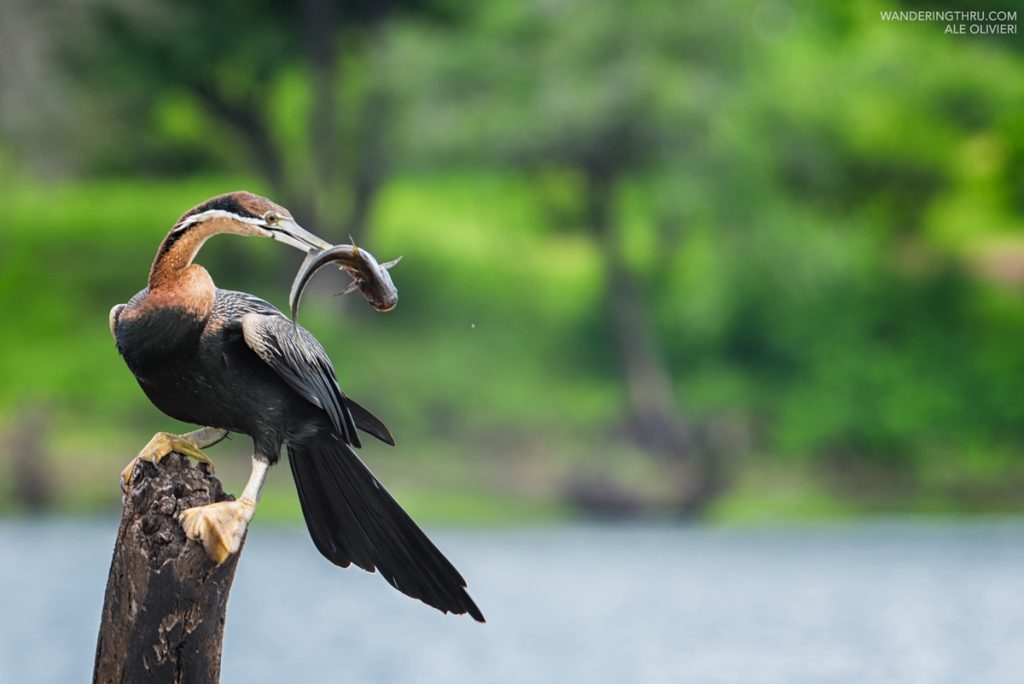
Birds like your African Darter and the herons will use their incredible speed and spear like bills to catch fish. Some kingfishers will hover above the water (Pied kingfisher) or drop down into the water from a perch, using the beak to penetrate the water surface and then catch the fish. Pelicans will sit in the water and trawl with their large beaks, scooping up water with fish, filtering the water out and gobbling the remaining fish down. African skimmers also trawl, but rather in flight, allowing their lower mandible to drag in the water, snapping shut on any small fish they may feel.
Filters
Flamingos have one of the craziest adaptions to their bills of all the birds. They have a large trough like lower mandible, with a powerful tongue that pumps water through as it is held upside down in the water. The two species found in Africa, the Lesser and Greater flamingos, have different size filters in their beaks and so forage for different prey. The Greater has a much larger filter, looking for shrimps and other small invertebrates, whilst the Lesser has a much finer filter, going for blue-green algae and the likes there of. As they don’t compete, these gregarious birds are often found together in large flocks.
Other filter feeders are your ducks and prions. They have built in sieves along the sides of their bills. These sieves are called lamellae and are their adaption for straining fine food particles out of the water.
Insectivores
This group has one of the biggest arrays of beaks used for hunting their different prey species. Warblers have short, tweezer like bills, shrikes have their hooked bills, slender bills of the bee-eaters and probing bills of an Hadeda Ibis. All of these to help catch insects, spiders, crustaceans and worms. Waders all have different shapes and lengths of probing bills. This allows different species to forage together as they don’t compete for the shame food, all feeding at different depths.
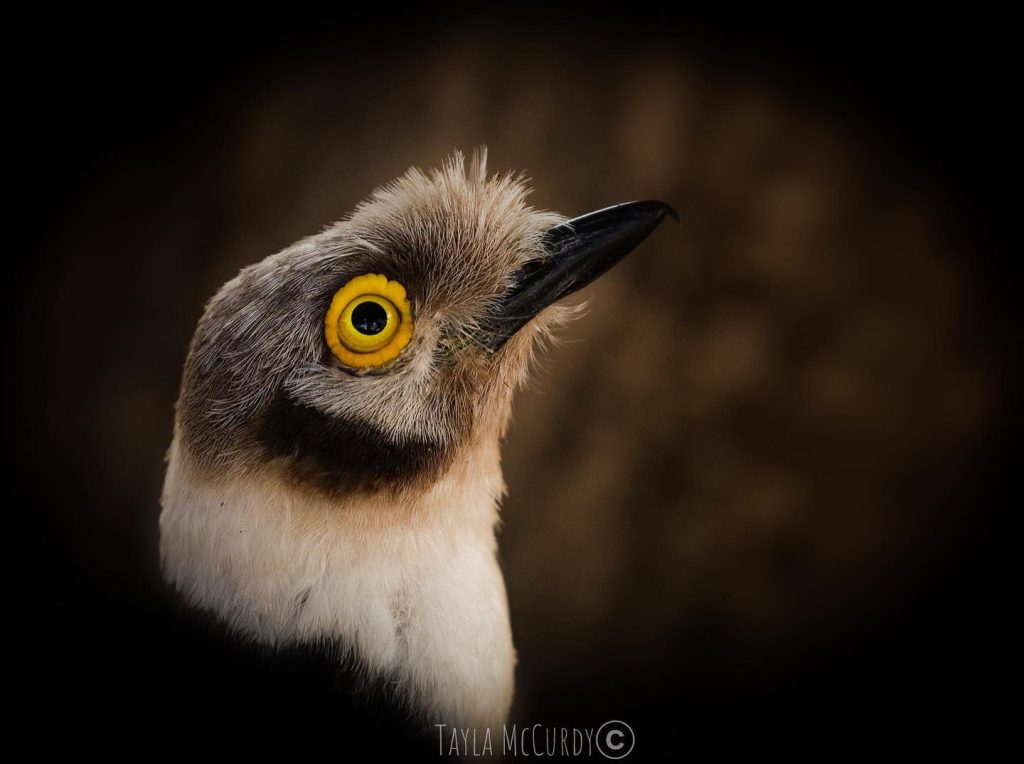
As the name says, bee-eaters do occasionally feed on bees. They will have their favourite hunting perches where they will sit and wait to hawk flying insects, often bees or wasps. If they catch one of these they can be seen rubbing their beak against a branch, extracting the sting of the insect before gobbling it down. It has been observed that they can tell the difference between stingless drones compared to workers that have stings and swallow the drones with less caution.
Frugivores
Where animals don’t want to be eaten and so are often camouflaged or have some other sort of defence, fruits are the exact opposite. They need to be fed on as that is how they rely on their seed dispersal. As a result, they are often brightly coloured to attract birds and other animals to them to be fed on. Most of the fruit eating birds and strong, thick bills for getting through tough skins or hard shells of some fruits. This will include birds like barbets, parrots and some of the hornbills.
Along with their beaks, these birds also need to have a specially adapted intestine. This means that an undamaged seed can sometimes pass through the gut very quickly. This means that the seed will be dispersed a small distance from the parent tree but not so far that it ends up in an unfavourable habitat. As fruits are seasonal, it means that a lot of these species are nomadic as they need to follow their food resources.
Seed-eaters
As we all know, seeds, although often small, can be incredibly hard and tough to feed on. This means that most seed-eaters have incredibly strong bills and jaw muscles to help them cope with this. There are two ways to feed on seeds, either by husking them first, or swallowing them whole.

Birds like doves and sandgrouse will swallow their seed whole. They swallow the entire seed which is then processed in the crop and gizzard. Some of these species are known to swallow thousands of seeds a day. The beaks of waxbills, canaries and finches are expert husking tools. Their conical shape with a groove and cutting edge on both mandibles, makes them adapted to husking the seeds and they only swallow the kernel.
Seeds are incredibly rich in carbohydrates and so high-energy, but they are low in protein and so many of these species will also feed on insects to gain their proteins. Seeds are also low in water and so most of these species need to drink daily, often congregating in large numbers around water sources. As with fruits, seeds are not all year round and so these species are often nomadic, following the rains and food like the quelea species.
Nectarivores
As with plants and pollinating insects, flowers and bird pollinators have a relationship that benefit them both. Whilst feeding on nectar, birds are fulfilling the important role of pollinating the flower. Pollen will often stick to the birds beak, face or chest and be transported to the next flower. Some birds and plants have such an important relationship that some species can’t survive without the other.

Sugarbirds and sunbirds both have long, thin beaks that are adapted to probe into flowers to access the nectar. Along with this, sunbirds have exceptionally long tongues which allows them to reach far beyond the tip of the beak, getting even deeper into the flower. These tongues themselves are deeply grooved or tubular and have a special brush like tip. Some sunbirds have a specialised flap that covers their nostrils whilst feeding, keeping pollen out.
These are not the only species of bird that feed on nectar as orioles, bulbuls and barbets will also feed on it when they can reach. As with seeds, nectar is not very high in proteins and sunbirds get the proteins they need from insects and spiders they also feed on.
Adaptions
The bills or beaks of birds is just another amazing adaption that this family of animals has managed to come up with. Allowing them to find food anywhere and everywhere, allowing them to cover all parts of the globe.