As with mammals, birds rely heavily on all five of their senses, with their eyesight and hearing the most important of all. Eyes are certainly necessary for finding food, mates and water, but more importantly they help with flight. A bird in flight is making quick and accurate movements, responding to all sorts of things around them as they move through their habitat. The amount of detail that they can pick-up and see is second to none.
Big eyes
Although a birds eye is very similarly built to any other eye, they have some differences. Our feathered friends have massive eyes in comparison to their skull. If you compare the skull of a bird and a mammal of similar size, the eye could be twice or even three times the size. The main advantage of the large eye is that the large image can fall on the retina itself and so give the bird a much more detailed image.

Having a closer look at the retina, we find that birds have more visual cells than most other animals. As with all eyes, the retina holds rods, for light, and cones for colour. Right in the middle of the retina, there is small depression called the fovea and this is where vision is its sharpest. The average bird has five times the visual cells than we as humans do and so their vision shows a lot more detail than ours.
Birds also have a special structure found in the inner eye, running from eye to optic nerve, it is called a pecten. The retina itself has no blood cells, but the pecten does and it supplies the retina with extra nutrients, again inhancing vision. Birds retinas also contain specialised oil droplets, which come in green, yellow, orange and red. These oil droplets help the bird cut out colours that would not necessarily help them and rather allow colours that will help, to pop and show up a lot better.
Colour vision
For a long time, people just assumed that like most mammals, birds that are active in the day have colour vision whilst nocturnal species see in black and white. We have not found that this is not the case and although diurnal birds do see more colour, the nocturnal species do too. Nocturnal species do just not have the full colour spectrum than the diurnal birds.
Birds have far more colour sensitive pigments in their eyes than we do. Birds have four or five different colour pigments, while we only have two. This allows them to have a far broader colour spectrum than what we could ever imagine having.
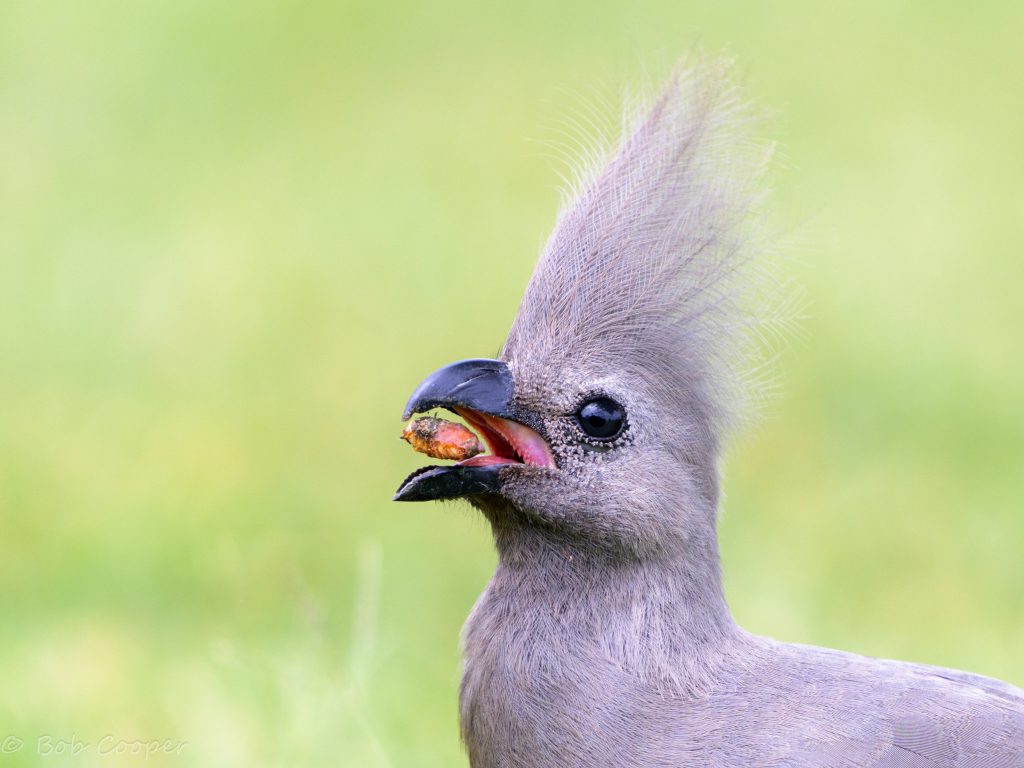
As with all animals, the ability to see colour is very important for searching for food, but also for selecting the right thing to eat. Colour is important to see if fruits are ripe to eat, or when flowers open up and attract pollinators to pollinate them. It can also tell when things are not edible, showing off aposematic colouration, warning that something might well be poisonous or dangerous and not at all edible.
Night vision
Like us and other mammals like the big cats, nocturnal birds cannot see when it is completely dark. Like the nocturnal mammals, they can see under very low light conditions and just a few stars or sliver of the moon, can light their world up. As birds eyes are so sensitive, it is thought that their nocturnal eyesight is far superior to the nocturnal mammals eyesight.
Nocturnal birds generally have much larger eyes than diurnal bird of the same size. This also allows them to dilute the pupil massively, allowing as much light in as possible. One thing they have given up is clarity and it is thought diurnal species have a much sharper vision, also seeing further. Their eyes are also very sensitive to movement and so something keeping very still can evade their detection.
The UV Spectrum
Studies are still being done on different species of birds in different regions, but it is for certain that birds can see ultraviolet light. Birds have another extra pigment in the cone cell that allows them to see it. We aren’t entirely sure as to why birds see ultraviolet light, but we have a some ideas at least as to why they may need it or use it.
Birds could use it when migrating. UV rays from the sun still penetrate clouds and so birds would still be able to figure out where they are going on a cloudy day. Some birds of prey may use it to pick up urine droplets of their rodent prey species. This would allow them to concentrate their efforts around areas where the rodents are more active. Certain fruits grow a waxy coating and some flowers have all sorts of patterns on them, that can only be seen in UV. Some birds have been found to have feathers that can reflect UV light. This could be to show off to potential partners or even follow one another in the dark.

Cleaning and protecting
Birds, like most reptiles and amphibians a third eyelid, called the nictitating membrane. This membrane swipes sideways across the eyeball as it what helps keep the eye moist and clean. For underwater hunters the membrane is very much transparent and helps them keep the eye open whilst submerged. It is said to aid against cold for birds flying at high altitudes or birds flying over a large distance. Along with ridges along the eye and lashes that shade the eye, it is thought that oils droplets in the eye act as a pair of sunglasses for the eye, protecting it from the harsh sun rays.
From vultures that can spot a carcass from 25 000 feet as they hover, or a nightjar using the stars to silhouette a moth against the night sky, or a sunbird finding a honey suckle flower, birds have incredible eyes. Thank goodness they can’t speak, or they may have teased us at how poor our eyes are in comparison.